
Julia is shortlisted in Sony World Photo Awards!
Professional Landscape category in World Photography Awards. Series 2D frozen World
Photographed during the Adventure with Happy Campers
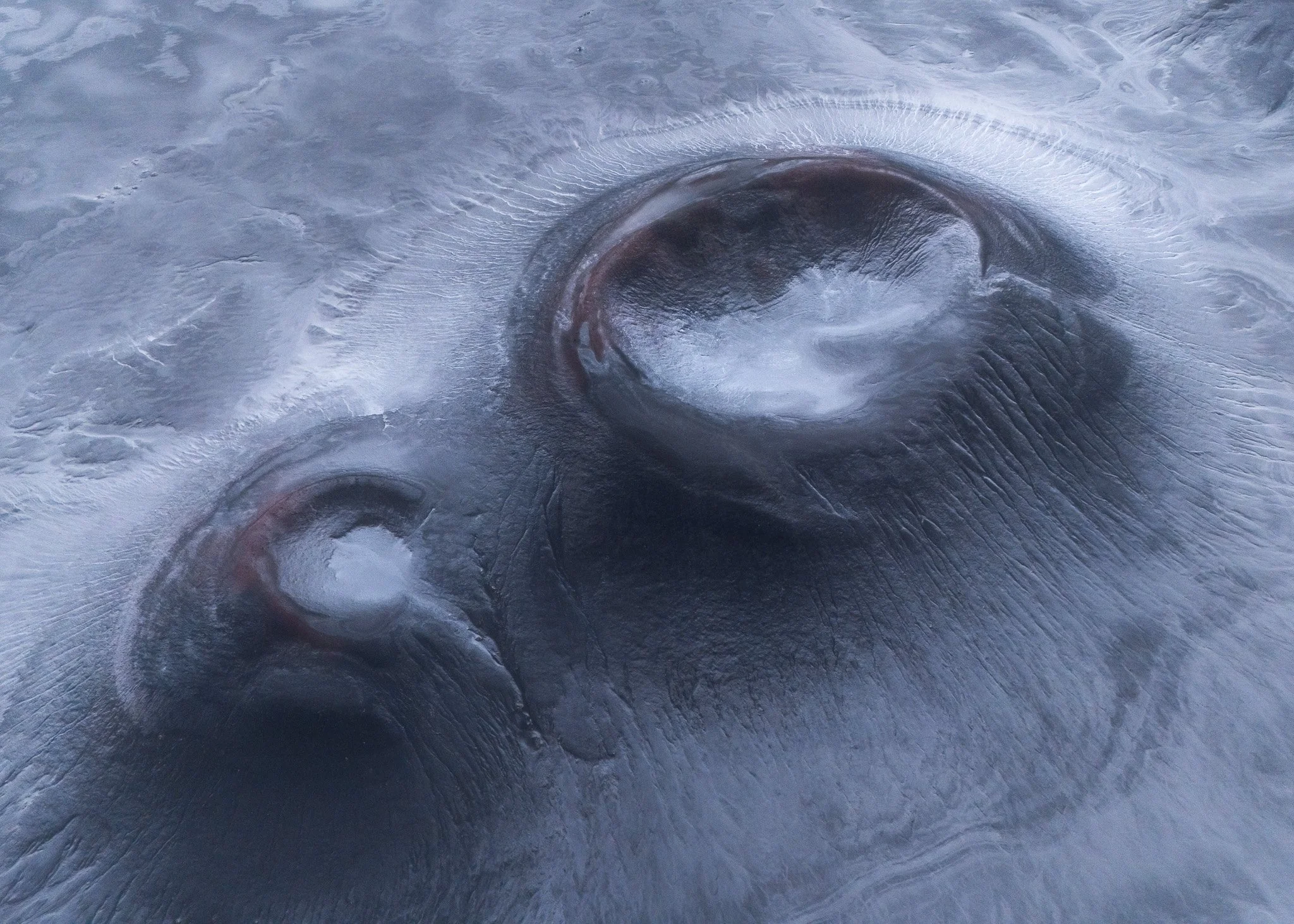
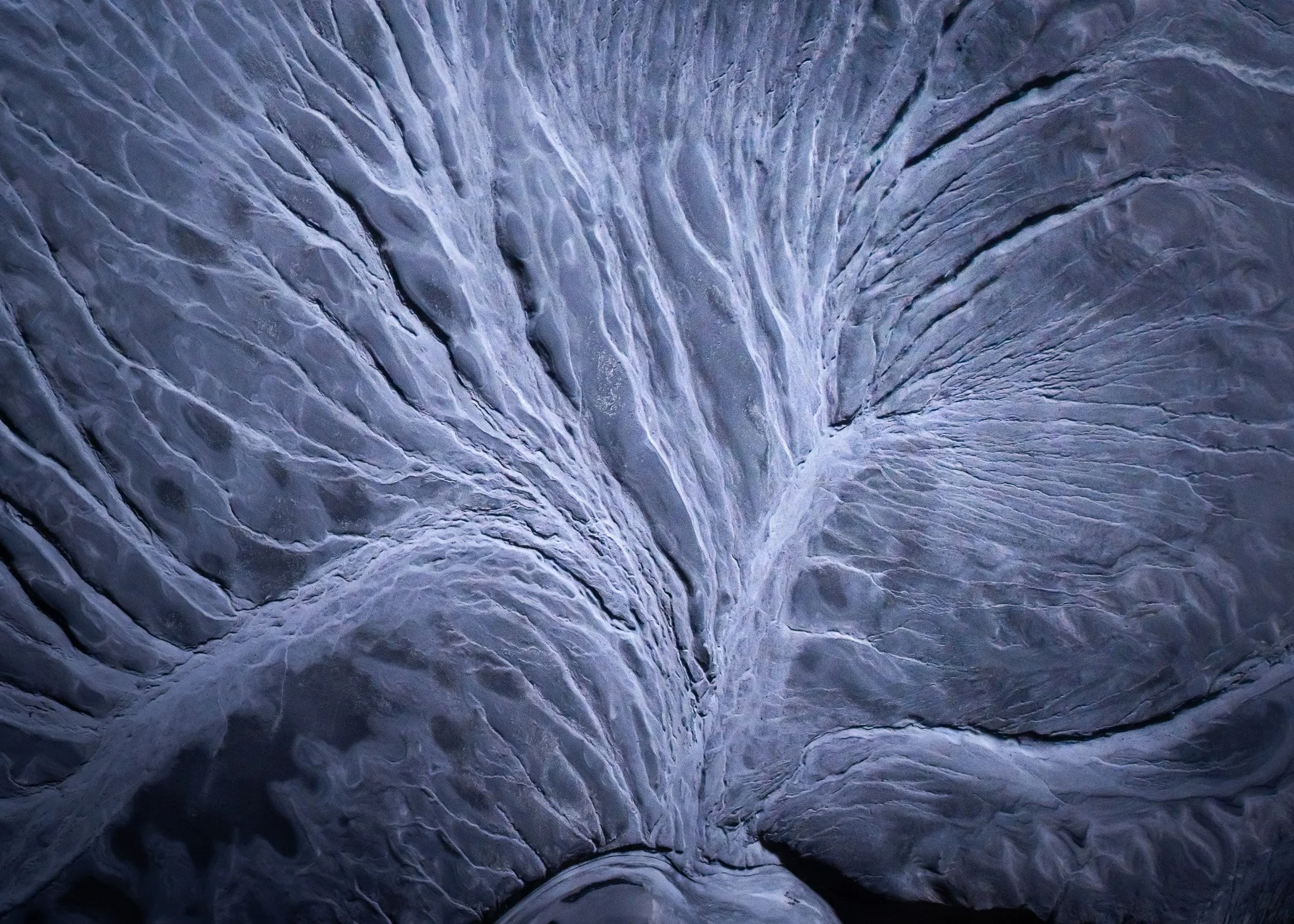
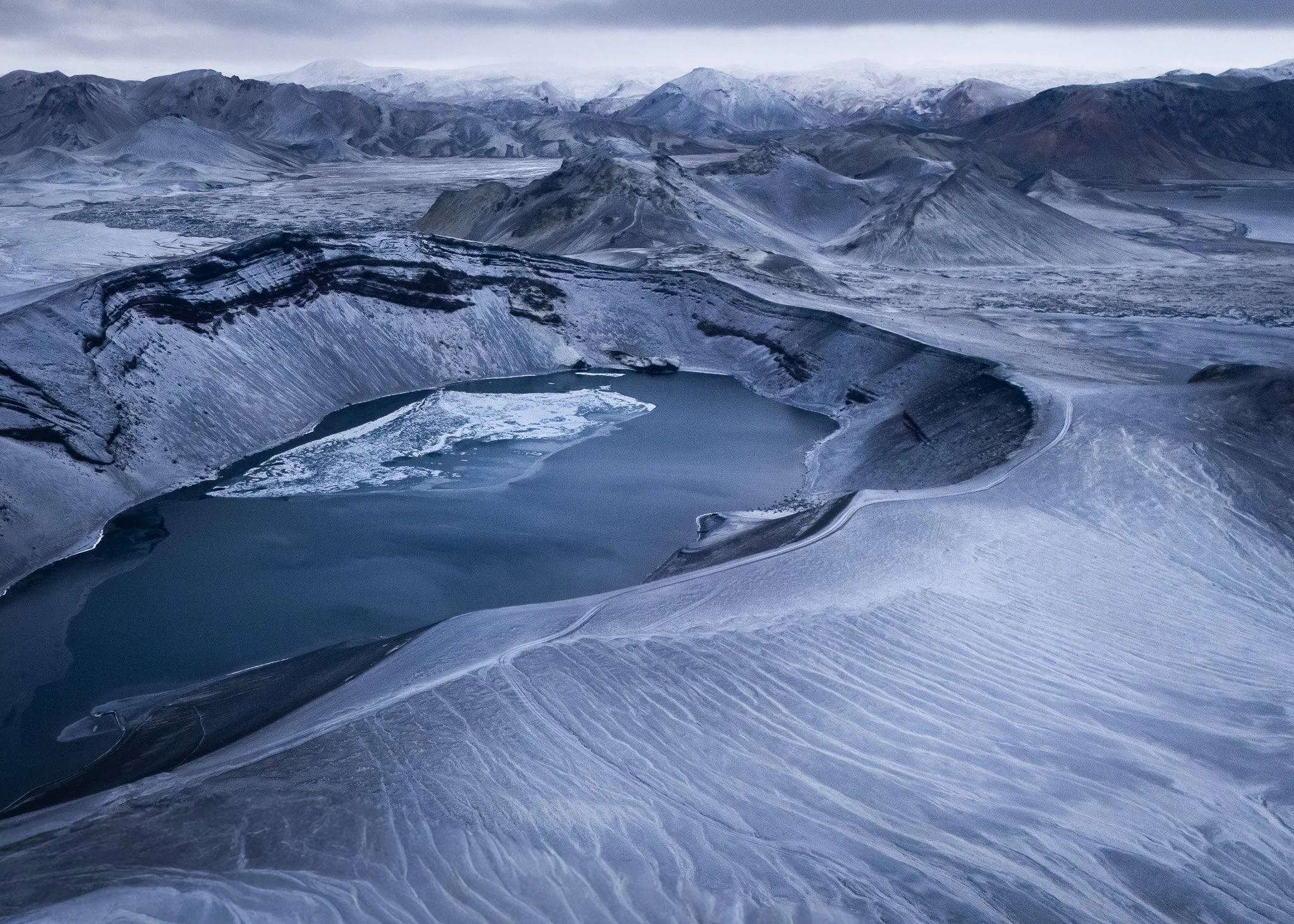
Click here to see:
Link to the World Photography organisation presentation page
In this blog post you will see more unpublished images from the same series.
Frozen World — The Story Behind the Images
When I look back at these photographs now, it still feels a bit unreal that we even made it into the Highlands that day.
It was the very last day the Icelandic Highlands were still officially open before winter closed the roads for the season. The forecast already looked rough, but we decided to go anyway. Sometimes in Iceland you just have to take the chance, because the weather changes everything within hours.
And that morning, something incredible happened.
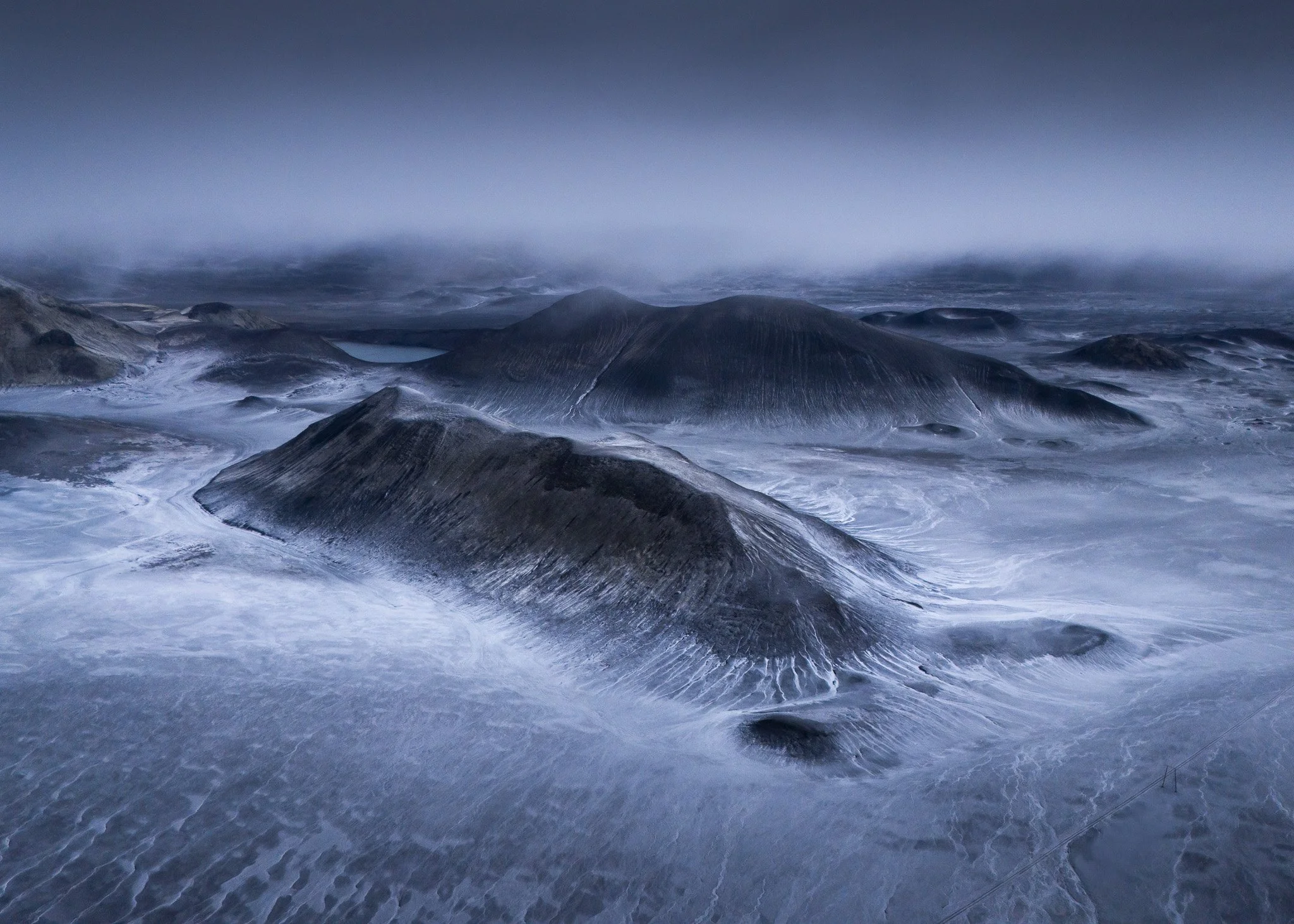
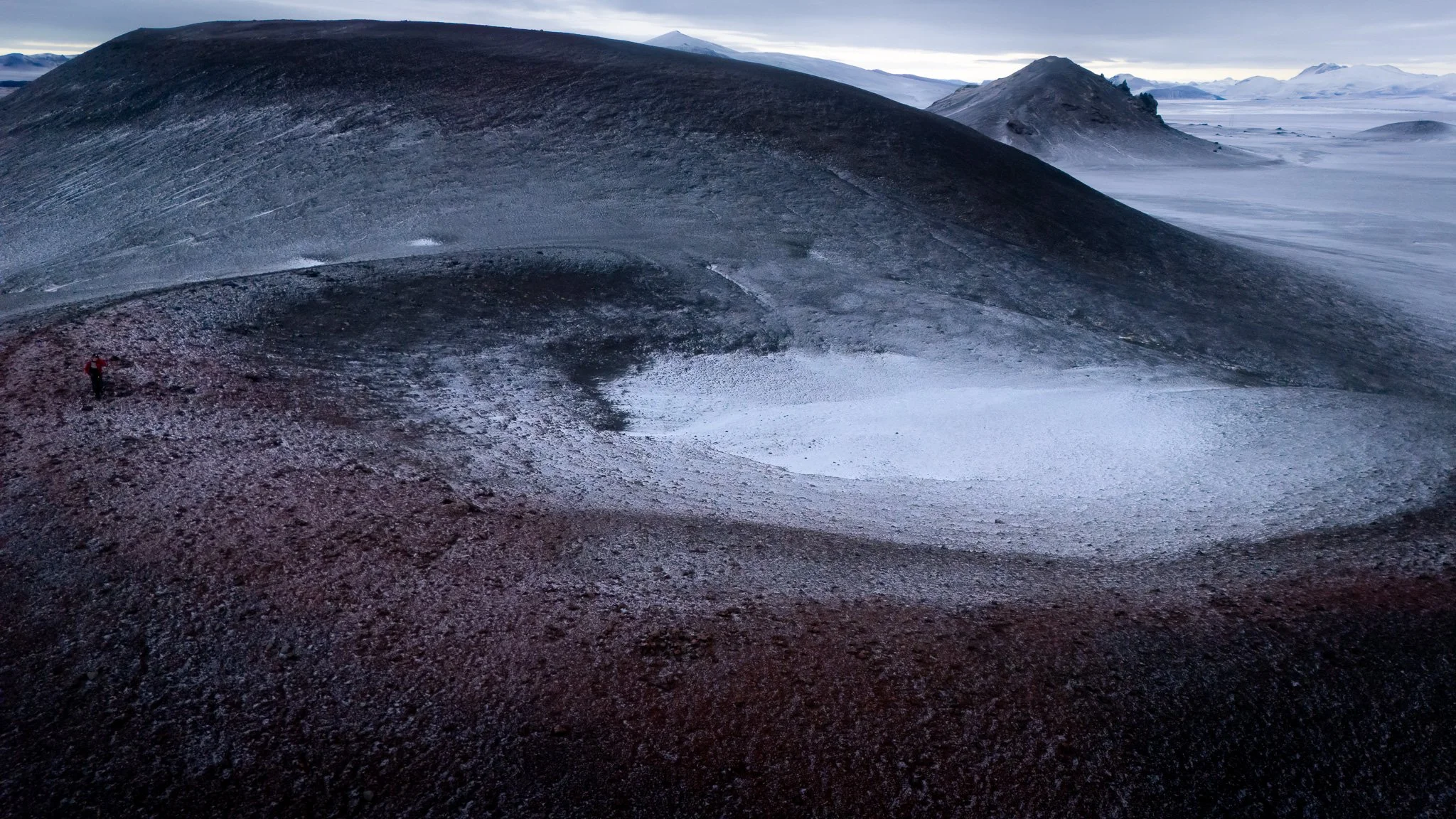
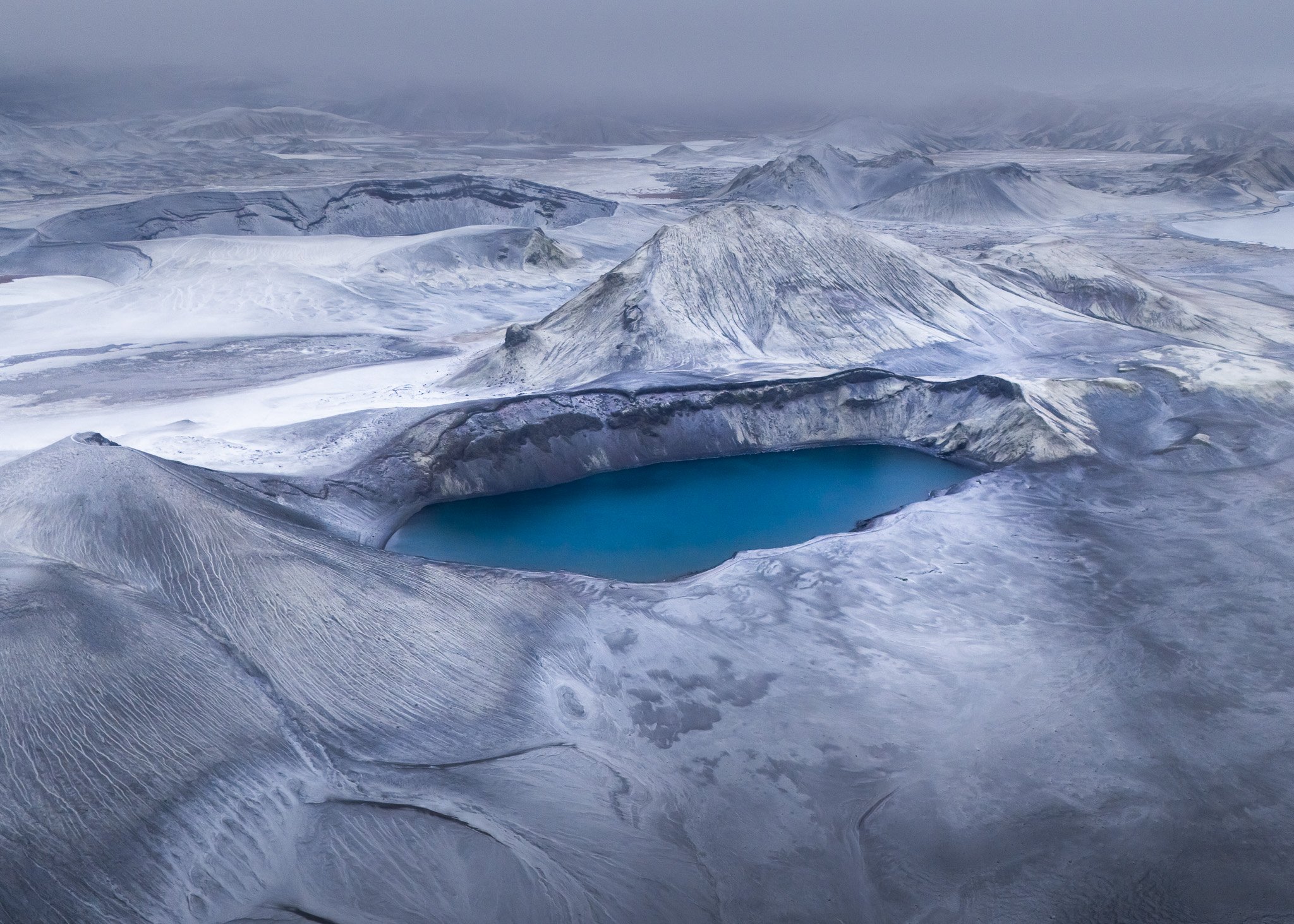
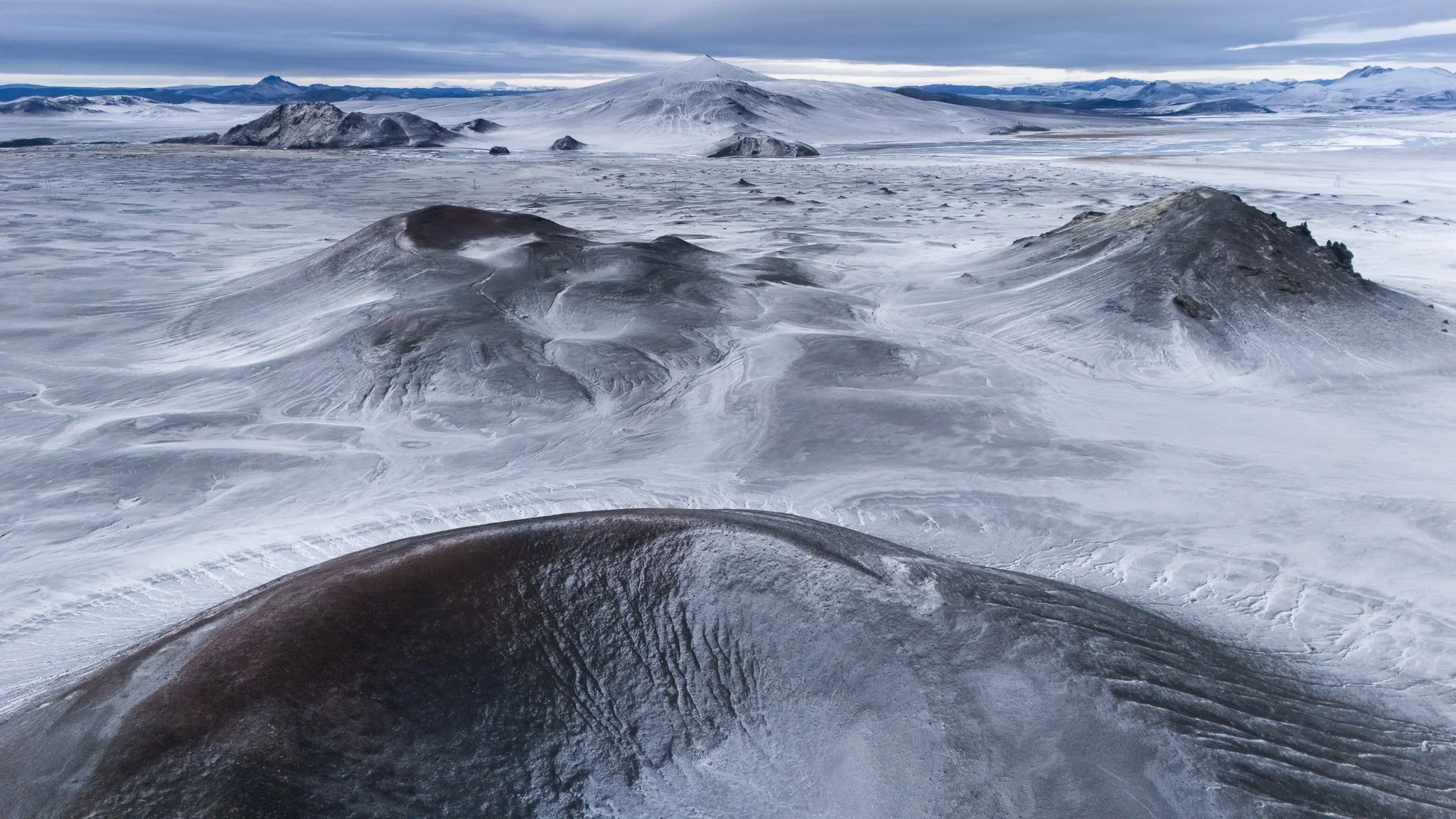
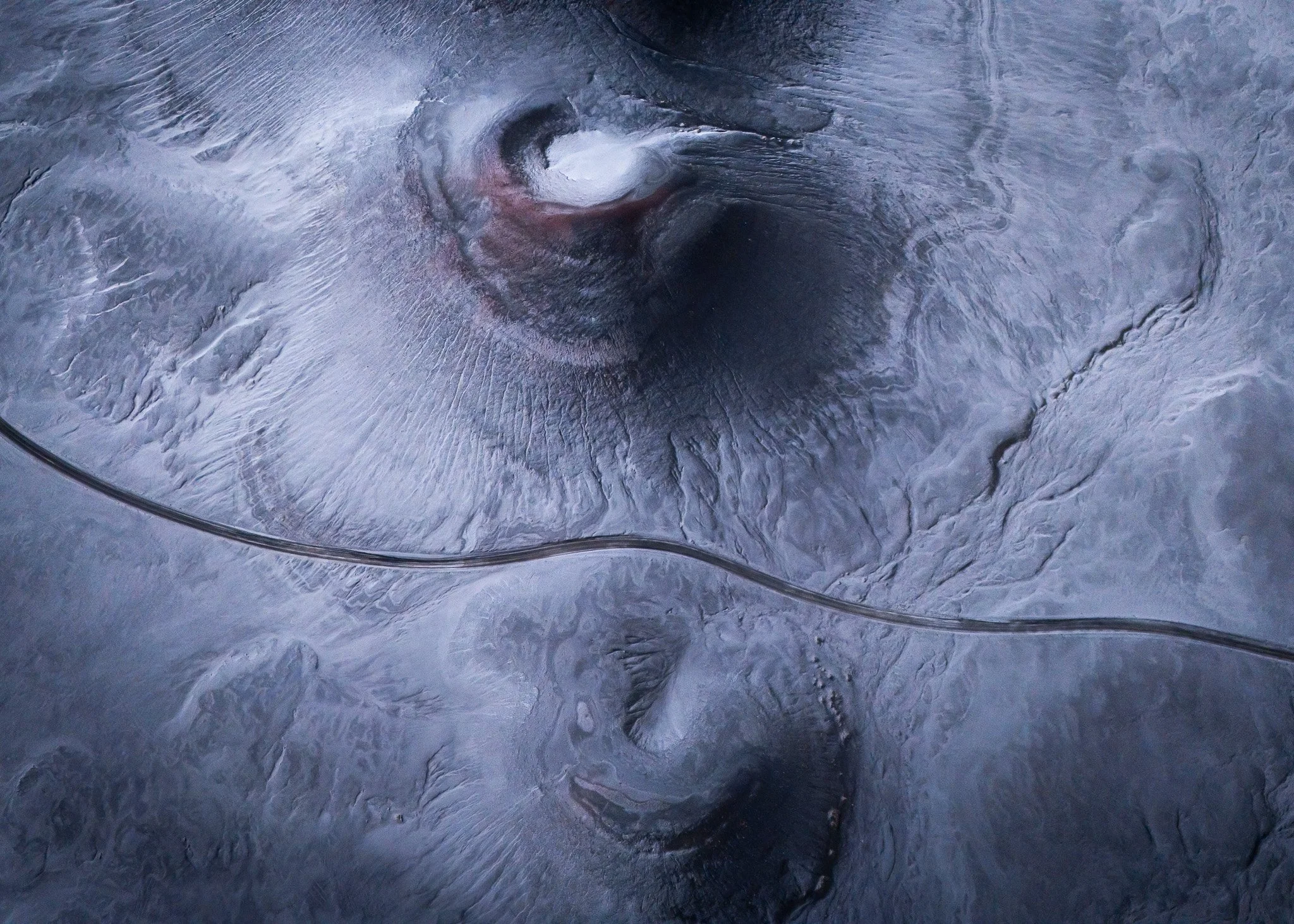
The first snow had started falling across the black volcanic landscape. Not heavy winter snow yet — just this thin, soft layer covering the black sand, lava fields, rivers, and mountains. The contrast was honestly one of the most beautiful things I’ve ever seen. Iceland normally does not look like this. The Highlands are usually dark, raw, and almost monochrome in autumn, but suddenly everything had these white highlights and frozen textures that made the landscape feel almost unreal from above.
It looked like another planet.
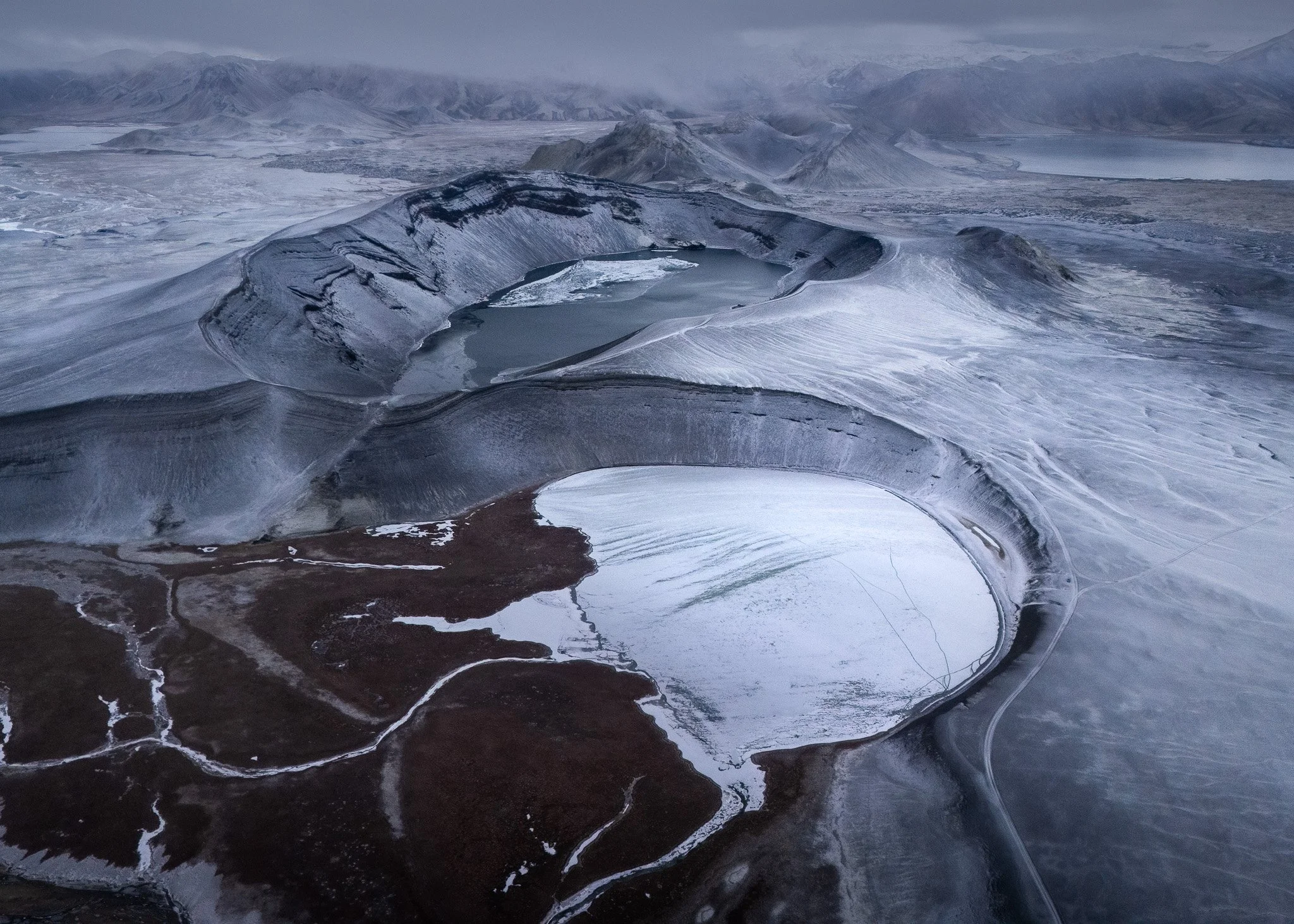
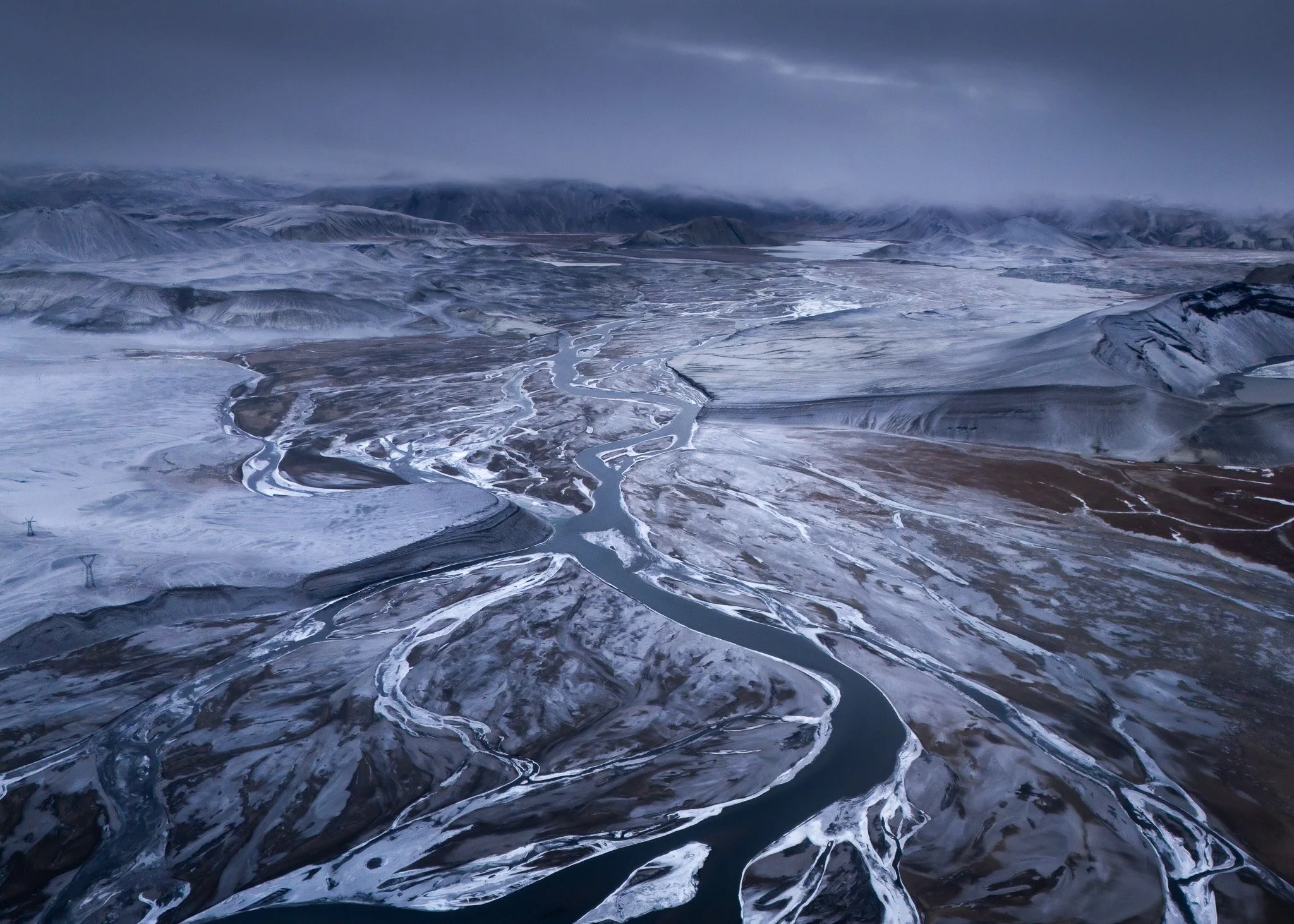
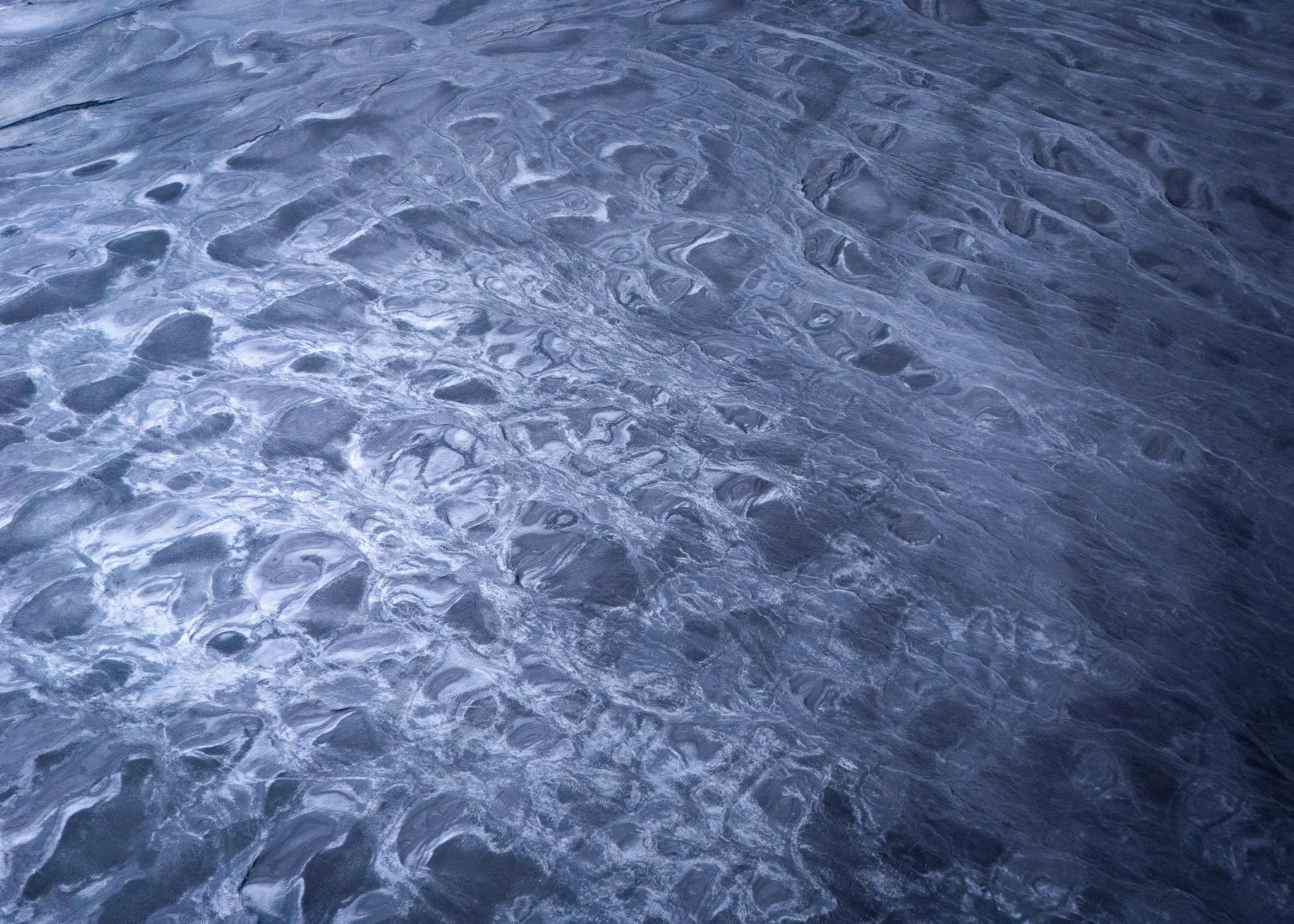
All of these images were photographed by drone, which was really the only way to fully see what was happening in the landscape. From the ground you experience the weather and scale, but from the air the rivers suddenly become these abstract silver lines cutting through black volcanic deserts. The snow revealed shapes and textures that are normally invisible.
The crazy part is how temporary it all was.
Right after these flights, the weather turned into a full snowstorm. Visibility disappeared, the conditions became difficult very fast, and shortly after that the Highlands closed completely for winter. We basically witnessed this tiny transition moment between autumn and winter that maybe only existed for a few hours.
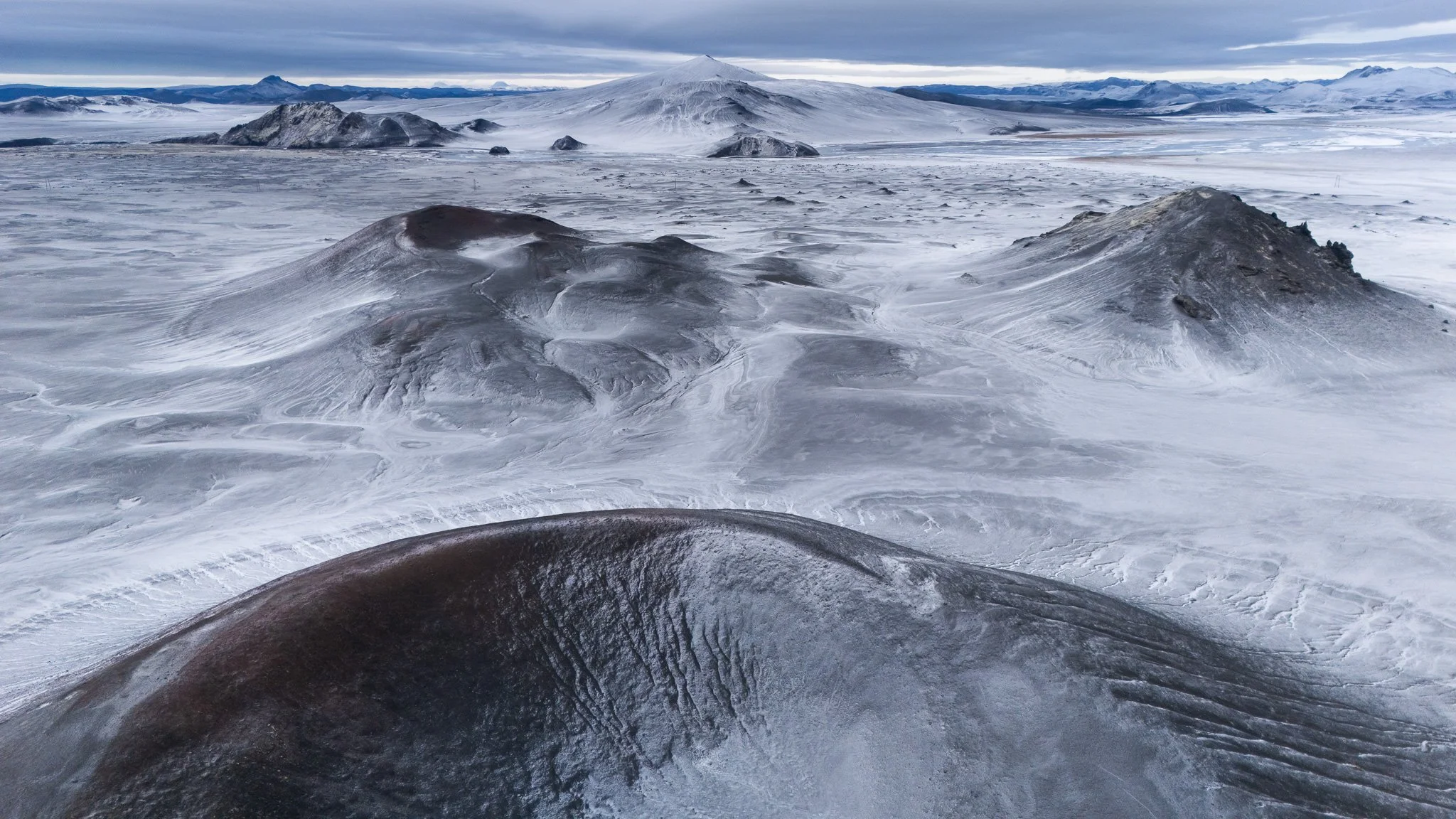
That’s what makes this series so personal to me.
As a photographer, you can spend years chasing conditions that are truly unique — not just beautiful, but rare. This was one of those moments where nature gives you something unexpected for a very short time, and you just try your best to capture it before it disappears again.
But I also want to say very clearly: driving the Highlands this late in the year can be dangerous, and I would never recommend underestimating it.
Many of the river crossings were already partially frozen, which can actually make them even more unpredictable. Ice can hide both the depth and the current underneath, and conditions can change completely within just a few hours depending on temperature, rain, or snow. Some rivers that are normally manageable suddenly become risky once ice starts forming along the edges.
Choosing the right car
We had a very strong 4WD from Happy Campers Iceland and a lot of experience driving difficult roads, but even then there were moments where we had to stop, get out of the car, study the crossings carefully, and sometimes rethink the route completely.
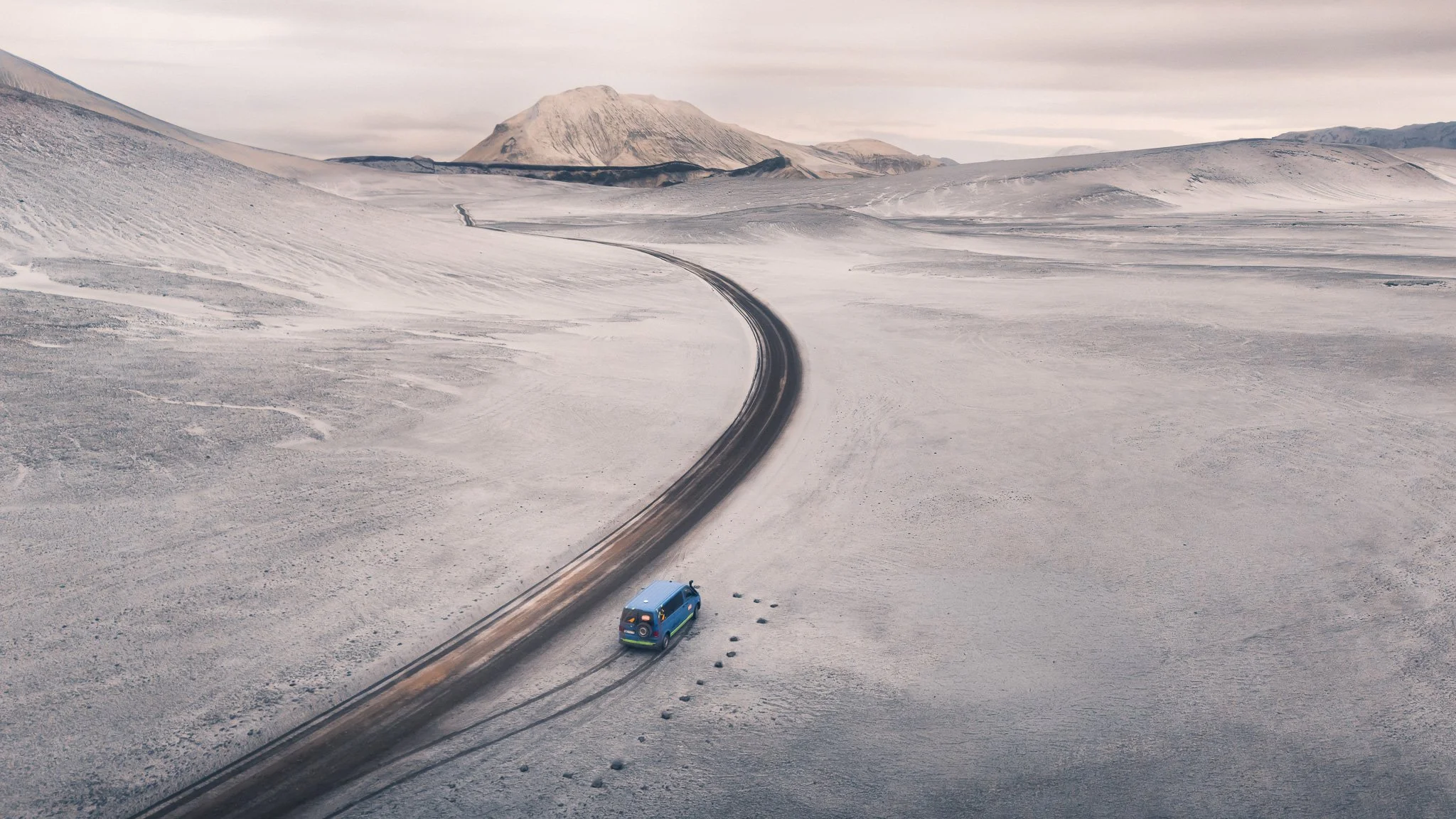
Happy camper 4WD with snorkel
People often see beautiful Iceland photos online and forget how remote the Highlands actually are. There is often no phone signal, no nearby traffic, no rescue nearby, and weather systems move incredibly fast. Once the first snow arrives, roads become harder to read, volcanic tracks disappear under white surfaces, and wind can create whiteout conditions within minutes.
One thing I learned during this trip is how important timing is. In summer, many Highland roads are challenging but still accessible for experienced drivers with proper vehicles. Late autumn is a completely different world. Even if roads are technically still “open,” conditions can already feel almost winter-like.
If anyone is considering driving the Highlands late in the season, I would honestly recommend:

River crossing in late October
Only use a real 4WD vehicle approved for F-roads
Never attempt Highland driving in a normal rental car
Check the Icelandic weather forecast several times per day
Monitor road conditions constantly because closures happen fast
Never cross a river if its frozen and you are there for the first time
Be prepared to turn around even after driving for hours
Carry extra food, warm clothing, water, and emergency supplies
Start routes early because daylight disappears quickly in autumn
Download offline maps because signal can disappear completely
Avoid traveling alone if possible
One day trips only, in and out. Don’t stay overnight
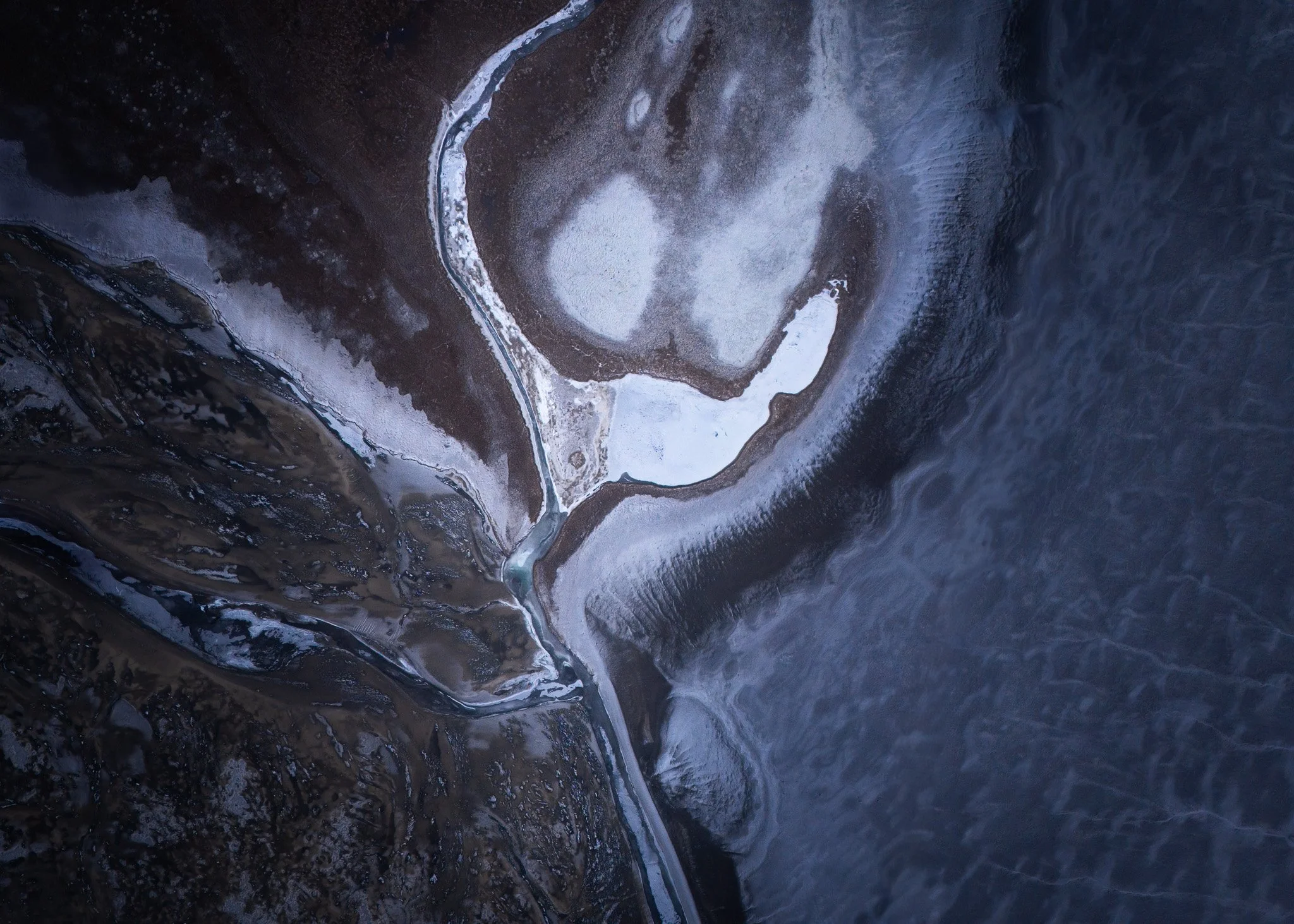
For me, the adventure itself and finding this rare view also part of what makes these photographs meaningful. They came from a moment that was both incredibly beautiful and genuinely wild. Iceland in late autumn is not polished or easy — it’s raw nature doing whatever it wants.
Being shortlisted in the Professional competition at the Sony World Photography Awards means a lot because of that. It’s one of the biggest photography competitions in the world, with photographers entering from all over the globe, so having this series recognized internationally feels incredibly special. Especially because these images came from such an intense experience out in nature, in conditions that could never really be recreated in exactly the same way again.
For me, Frozen World is not only about Icelandic landscapes. It’s about timing, weather, uncertainty, and those rare moments when nature transforms into something completely different for just a brief window of time.
For a few hours, the Highlands became a frozen world of black sand, white snow, volcanic textures, and icy rivers before winter completely took over.
And then it disappeared again.
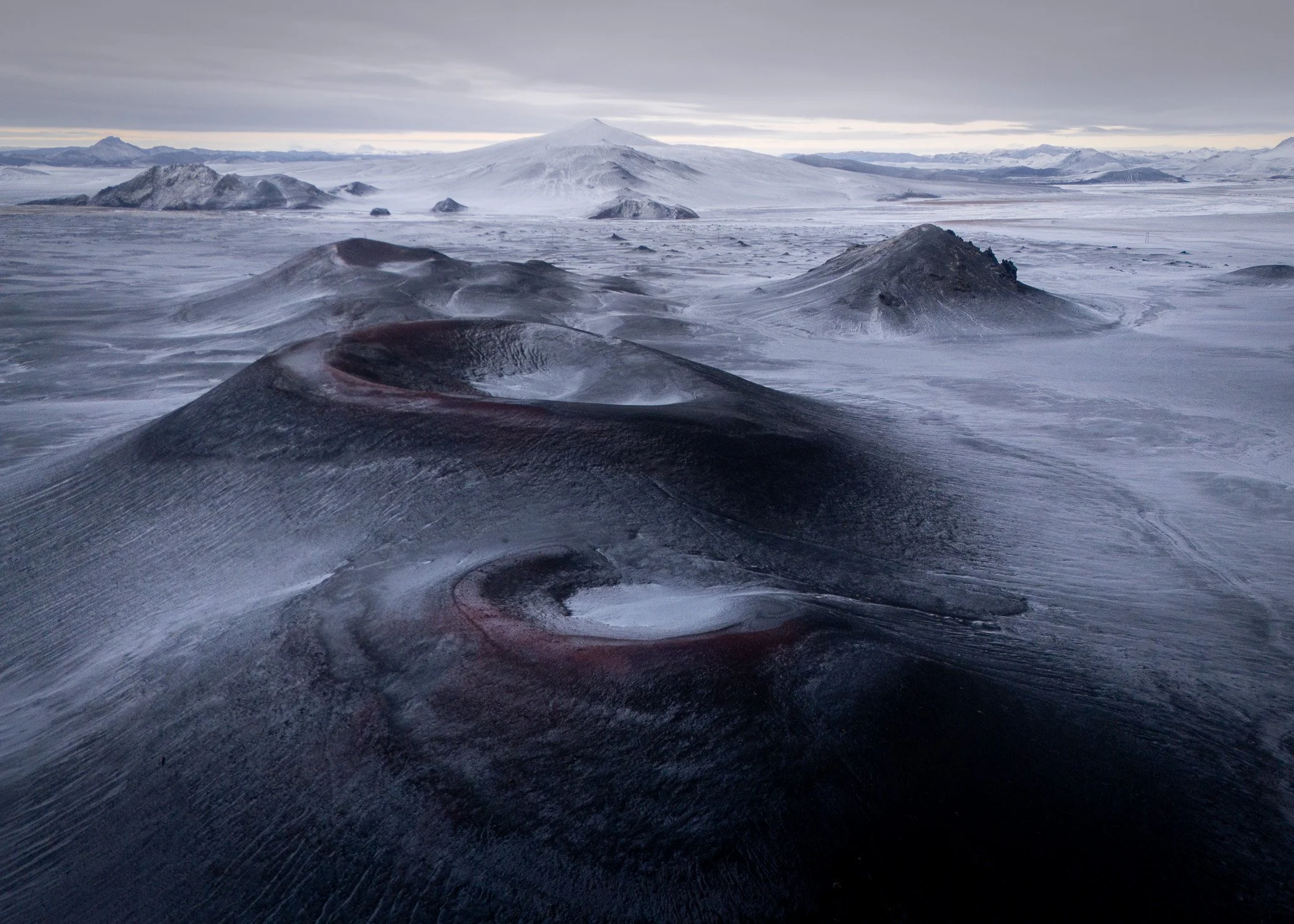
Chasing the Light
What I remember most from that day is the moment the light suddenly changed.
The weather had been moving constantly for hours — snow clouds coming and going, strong wind, low visibility, then suddenly small openings in the sky. Icelandic weather never stays still, especially in the Highlands that late in the year. Everything felt unpredictable.
I launched the drone almost without expectations because conditions were already becoming difficult. But then, for just a brief moment, the clouds opened enough for the light to hit the landscape in the most unreal way I have ever seen.
I still remember looking at the drone screen and honestly not believing what I was seeing.
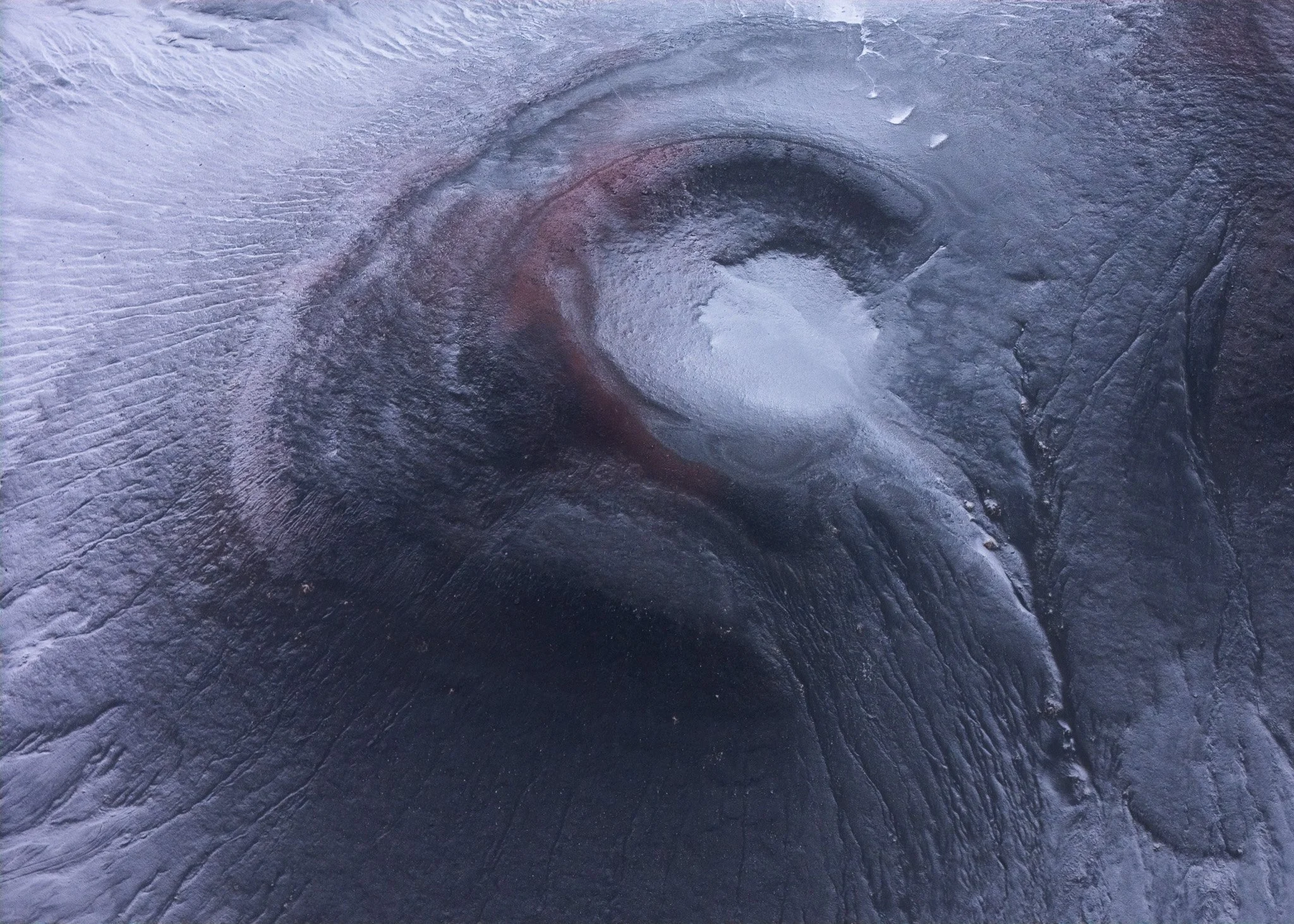
The black volcanic earth, the first white snow, frozen rivers, soft light reflecting across the textures — it did not even look real anymore. It looked like a painting or some aerial image from another planet. The snow was highlighting details in the landscape that normally completely disappear into the dark terrain. Suddenly every river curve, volcanic crack, and texture became visible from above.
I have photographed Iceland many times, in many seasons, and I have never seen the Highlands look like this before.
That was the moment I realized this was something special.
Aurora at Vestrahorn
Usually when you photograph landscapes, you are searching for composition or weather or light separately. But sometimes, very rarely, everything aligns at the same time for only a few minutes. The first snow arrived at exactly the right moment, before the heavy storm covered everything completely. The light stayed soft enough to create these abstract contrasts without losing the texture of the volcanic ground underneath.
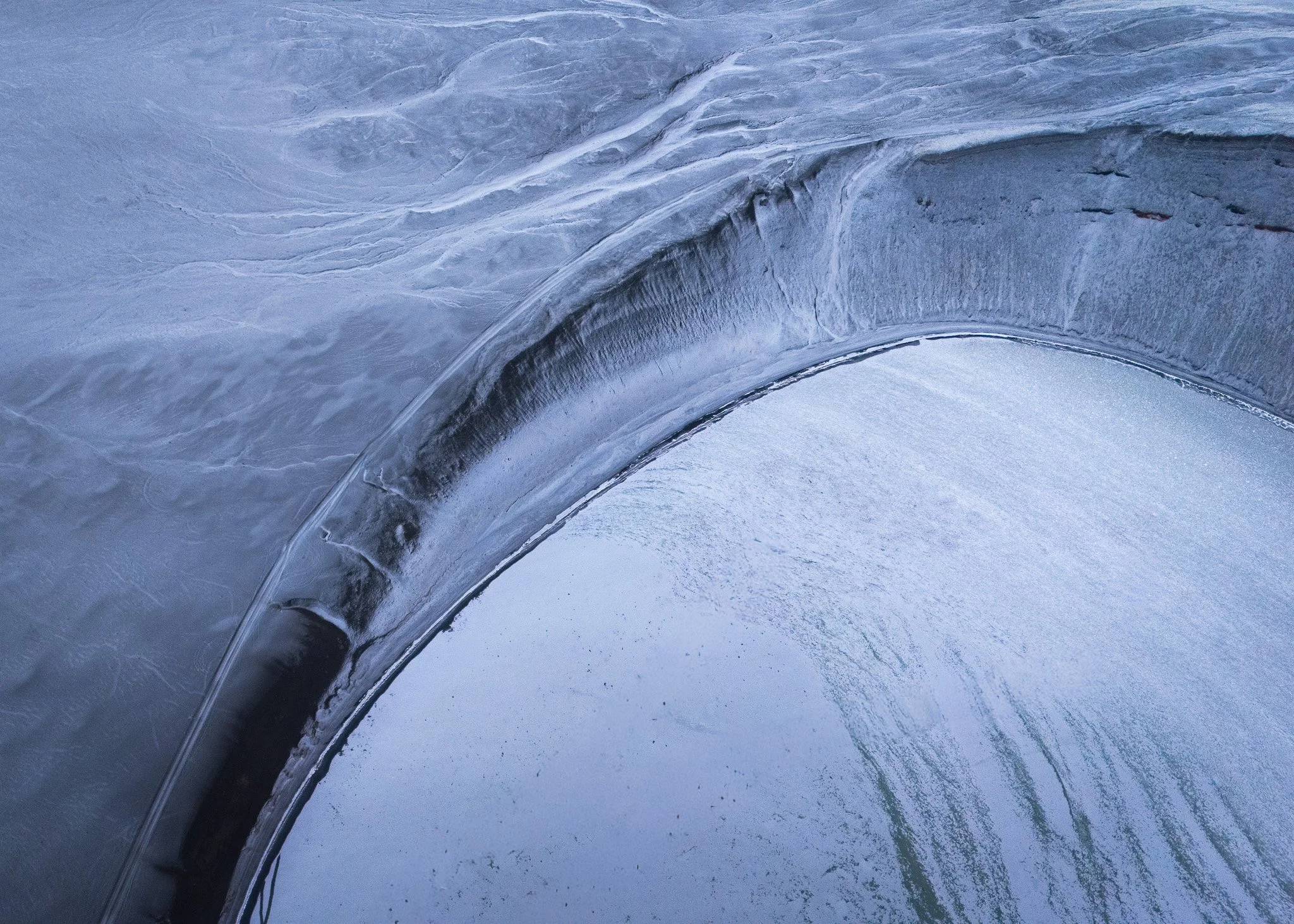
And because it was photographed from the air, the entire landscape transformed into something almost graphic and surreal. The rivers became like silver veins running through black deserts. The snow looked like brush strokes across lava fields. Every frame felt different from anything I had photographed before.
I think that’s why these images mean so much to me emotionally. It was not only about photographing a beautiful place — it was about witnessing a moment that felt impossible to repeat.
A few hours later the storm arrived fully, the visibility disappeared, and the Highlands slowly vanished into winter.
But for that short moment, the landscape revealed something I had never seen before.
Looking back now, I think what makes this series so important to me is not only the award or the recognition, but the feeling of being there in that exact moment.
Photography often teaches you patience. You drive for hours, wait through bad weather, deal with disappointment, and sometimes return with nothing. But every once in a while nature gives you something completely unexpected — a combination of light, weather, timing, and atmosphere that exists only briefly before disappearing again forever.
That is what Frozen World was for me.
The Icelandic Highlands are already one of the most dramatic landscapes on Earth, but during those few hours they transformed into something I had never seen before. The first snow softened the volcanic darkness just enough to reveal entirely new patterns and textures from above. It felt raw, silent, isolated, and almost unreal.
And maybe that is why drone photography became such an important part of this story. From the air, the landscape stopped looking like a place and started looking almost like abstract art created by nature itself.
Being shortlisted at the Sony World Photography Awards is something I am incredibly grateful for, because it means this rare moment connected with people far beyond Iceland. But at the same time, the real reward was simply experiencing it at all.
A few hours later the storm arrived, winter closed the Highlands, and the landscape changed completely.
The moment was gone.
But for one brief window of time, I had the chance to witness Iceland become a frozen world unlike anything I had ever seen before.
Text and Photography: Julia M. Dahlkvist
