
Aurora Hunting in Iceland
Chasing the Northern Lights in Iceland
A winter aurora hunt with Happy Campers

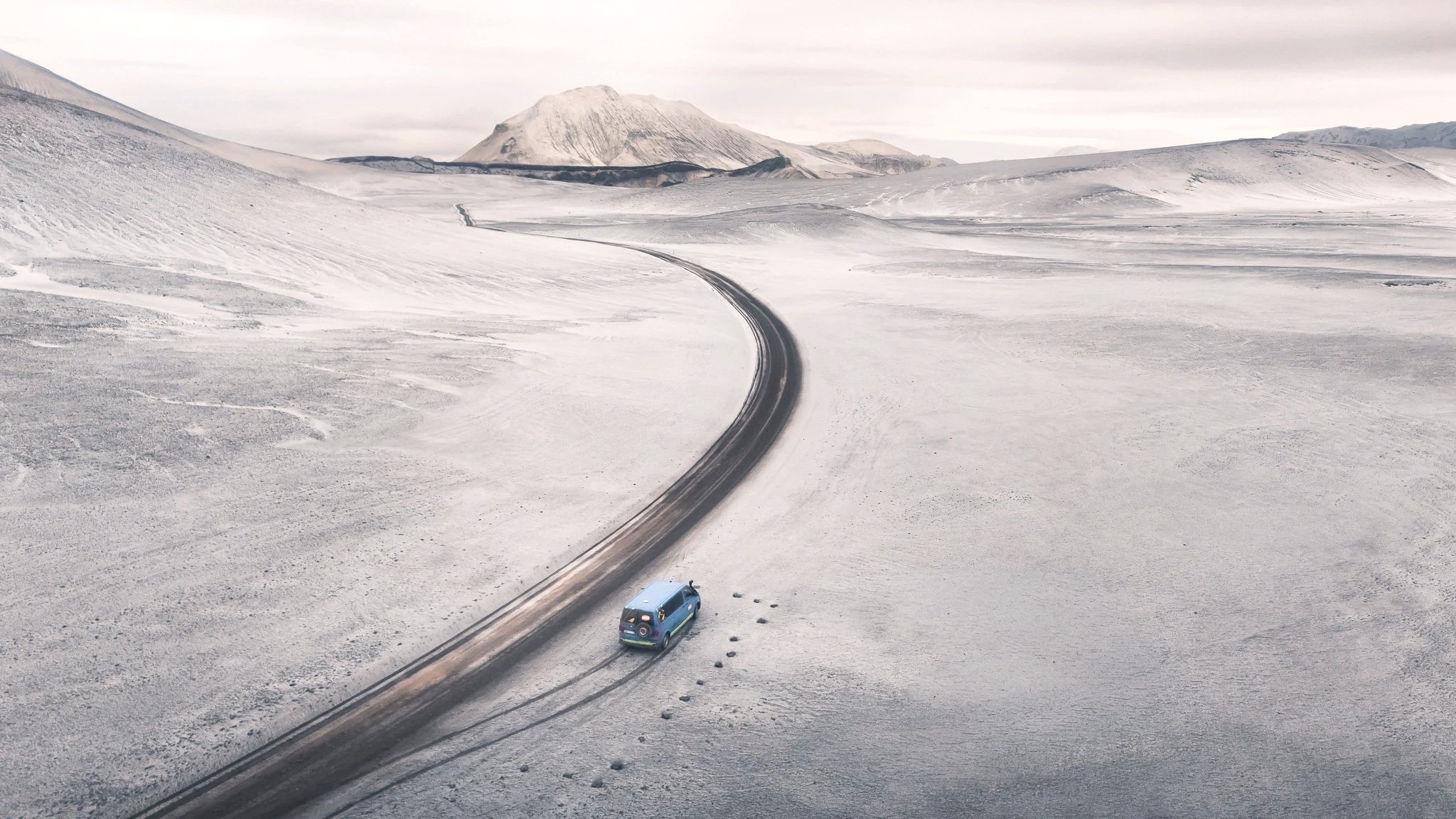
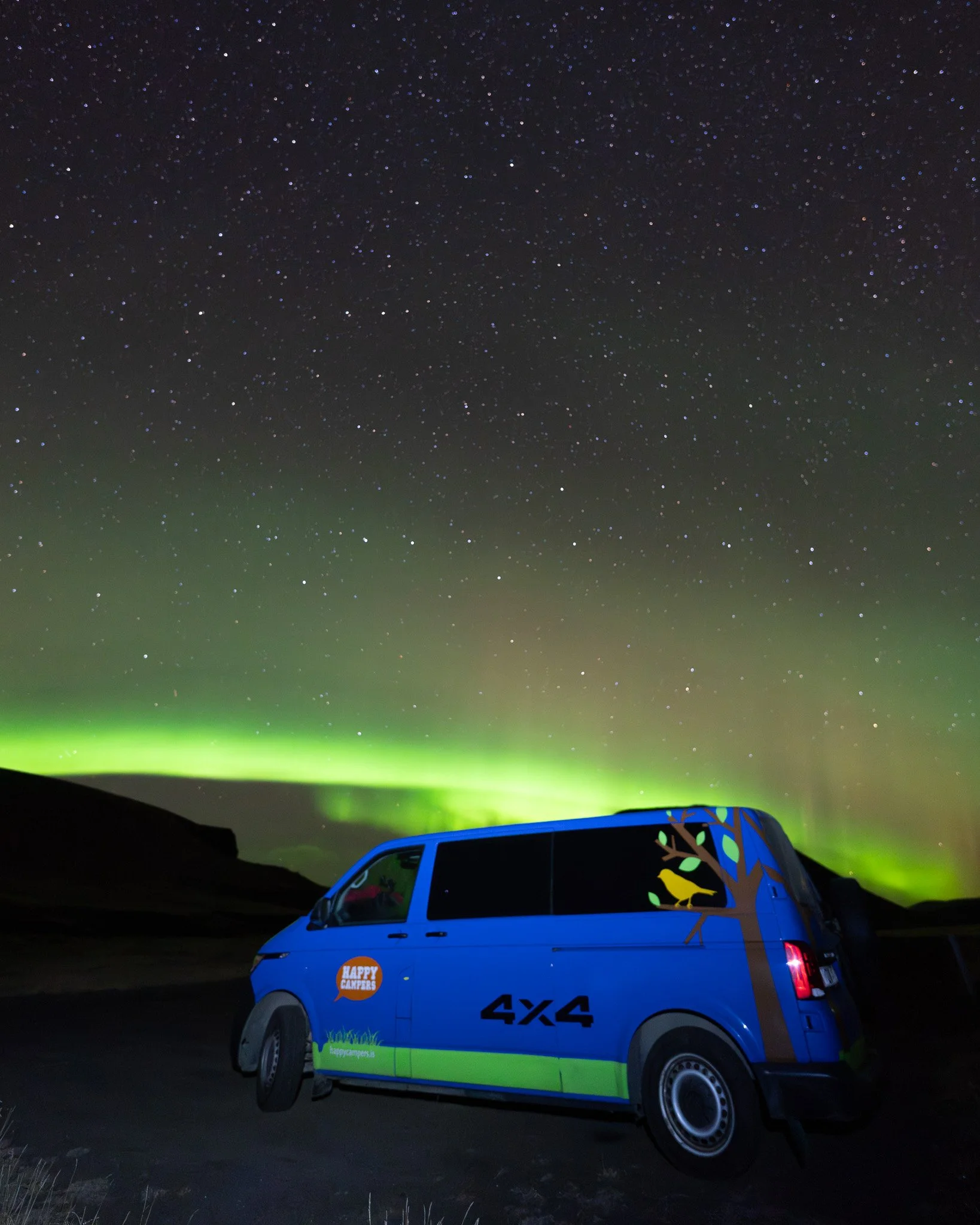
There is something deeply humbling about standing in the Icelandic winter night, surrounded by darkness, wind, and silence, waiting for something that may or may not happen. Aurora hunting is not about guarantees. It is about patience, preparation, and learning to be present in uncertainty.
In winter, Iceland becomes a place of contrasts. Harsh weather and gentle light. Long waiting and sudden magic. To experience it fully, you need freedom, warmth, and trust in your setup. For this journey, the camper car from Happy Campers became more than transport. It became our moving base, shelter, and anchor in the dark.
The plan
Before the trip even started, the plan sounded bold, simple, and slightly unrealistic in the best possible way.
Ten days in Iceland in winter. Stay up all night, every night. Sleep whenever we felt like it. Drive wherever the weather looked even slightly better. If the clouds moved, we moved. If the sky felt promising, we stopped. No alarms, no fixed routes, just coffee, curiosity, and a lot of optimism.
We talked about it like it was completely normal. Midnight drives turning into early mornings, spontaneous road decisions based on cloud maps, and that quiet excitement of stepping outside “just one more time” to check the sky. The idea was to be ready for anything and attached to nothing.
At that point, everything felt wide open. The nights ahead seemed endless, the forecasts were full of possibility, and the aurora felt like something that could appear at any moment. The plan wasn’t about guarantees, it was about being out there, awake, flexible, and fully available when the sky decided to join the adventure. But still it was a lot top think about and there is some things what I wish I would learn and plan better beforehand.
Iceland is fun but can be tricky sometimes and driving along the country in the snow and ice - its a story of its on.

Winter driving in South Iceland
Winter driving in Iceland – respecting the conditions
Driving in Iceland during winter is not something to take lightly. Roads can change character within minutes. Snow turns to ice, wind picks up, visibility drops, and what looked calm on the map suddenly feels very real behind the wheel. Aurora hunting means driving at night, often far from towns, following breaks in cloud cover rather than fixed destinations. This requires confidence in both your own judgment and your vehicle. Studded winter tires, good ground clearance, and a reliable car are not luxuries here, they are prerequisites. I would always check and recheck www.road.is site and the weather prognoses.
The advantage of a camper car in winter is flexibility. You are not rushing back to accommodation. You can stop when conditions demand it, wait when visibility drops, and move again when the weather opens. With the Happy Camper 4X4, winter driving felt controlled and calm. That sense of safety allows you to focus on the sky instead of worrying about the road.
How to search for the aurora – patience before performance
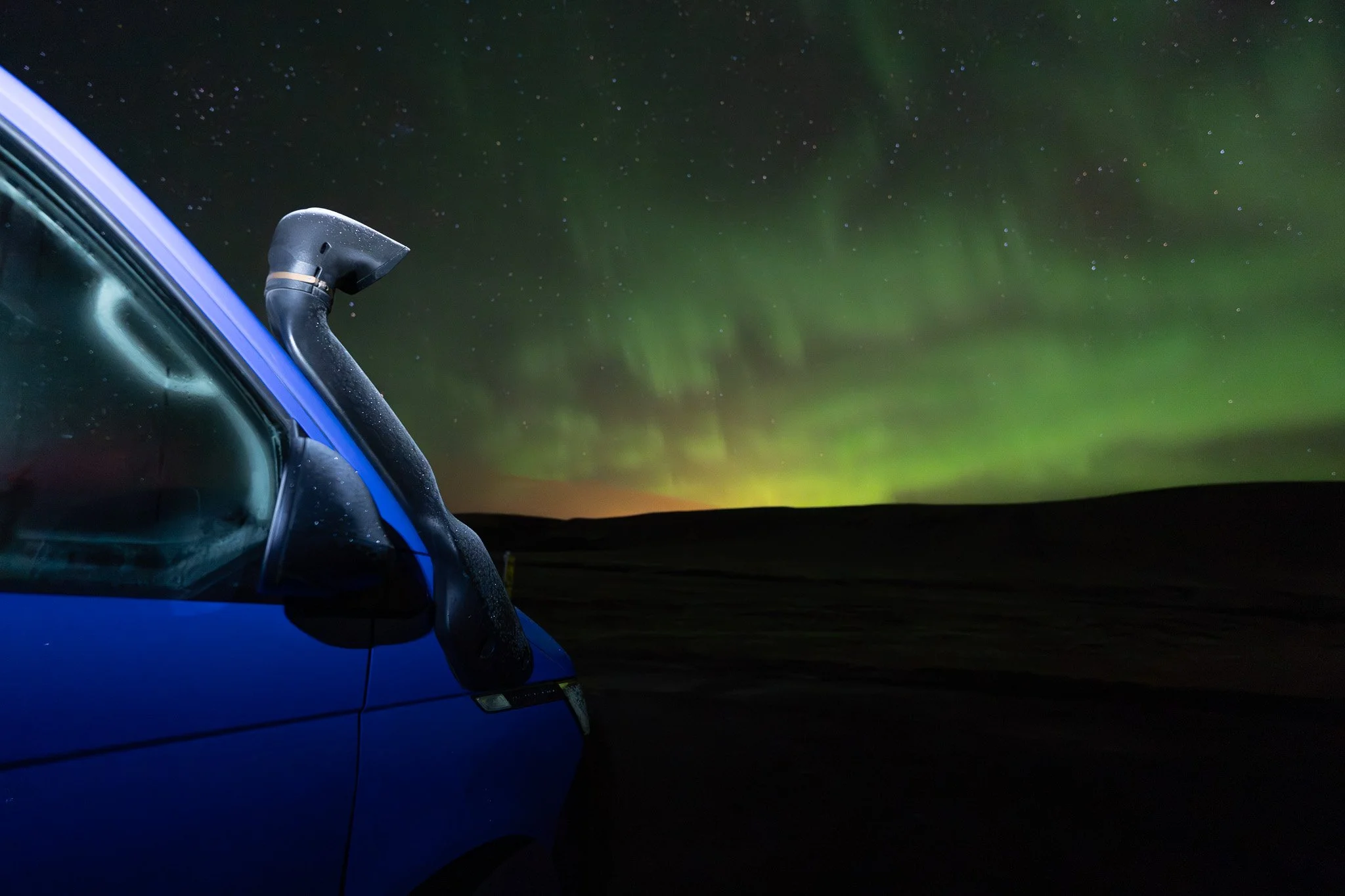
Aurora hunting starts long before darkness. It begins with understanding how the sky works.
I rely on three things:
Aurora forecasts for solar activity
Cloud cover maps, which are often more important than high KP values
Wind direction, which can clear skies unexpectedly
In Iceland, a modest aurora under clear skies often beats a strong storm hidden behind clouds. The strategy is simple in theory but demanding in practice: follow the clear skies, not the numbers.
The camper car plays a key role here. Instead of committing to one place, you move gradually, adjusting your route as forecasts change. Sometimes that means driving an extra hour. Sometimes it means stopping early and waiting. Having your bed, warmth, and food with you removes stress from these decisions.
How to Understand the KP index
Think of the KP number as a very rough energy meter for the Sun.
The Sun is constantly throwing particles toward Earth. When more of that energy reaches us and interacts with Earth’s magnetic field, the aurora becomes more active. The KP index is simply a way to describe how disturbed that magnetic field is. Higher number means more energy in the system. That’s it.
What often causes confusion is how people expect this number to behave. Many assume that a high KP guarantees aurora and a low KP means nothing will happen. In reality, especially in Iceland, it works very differently.
Iceland sits right under the aurora belt. Because of that, you don’t need strong solar storms for the lights to appear. Even low activity can be enough if the sky is clear. In fact, some of the most beautiful aurora nights happen at surprisingly low KP.
But here is the official numbers and predictions:
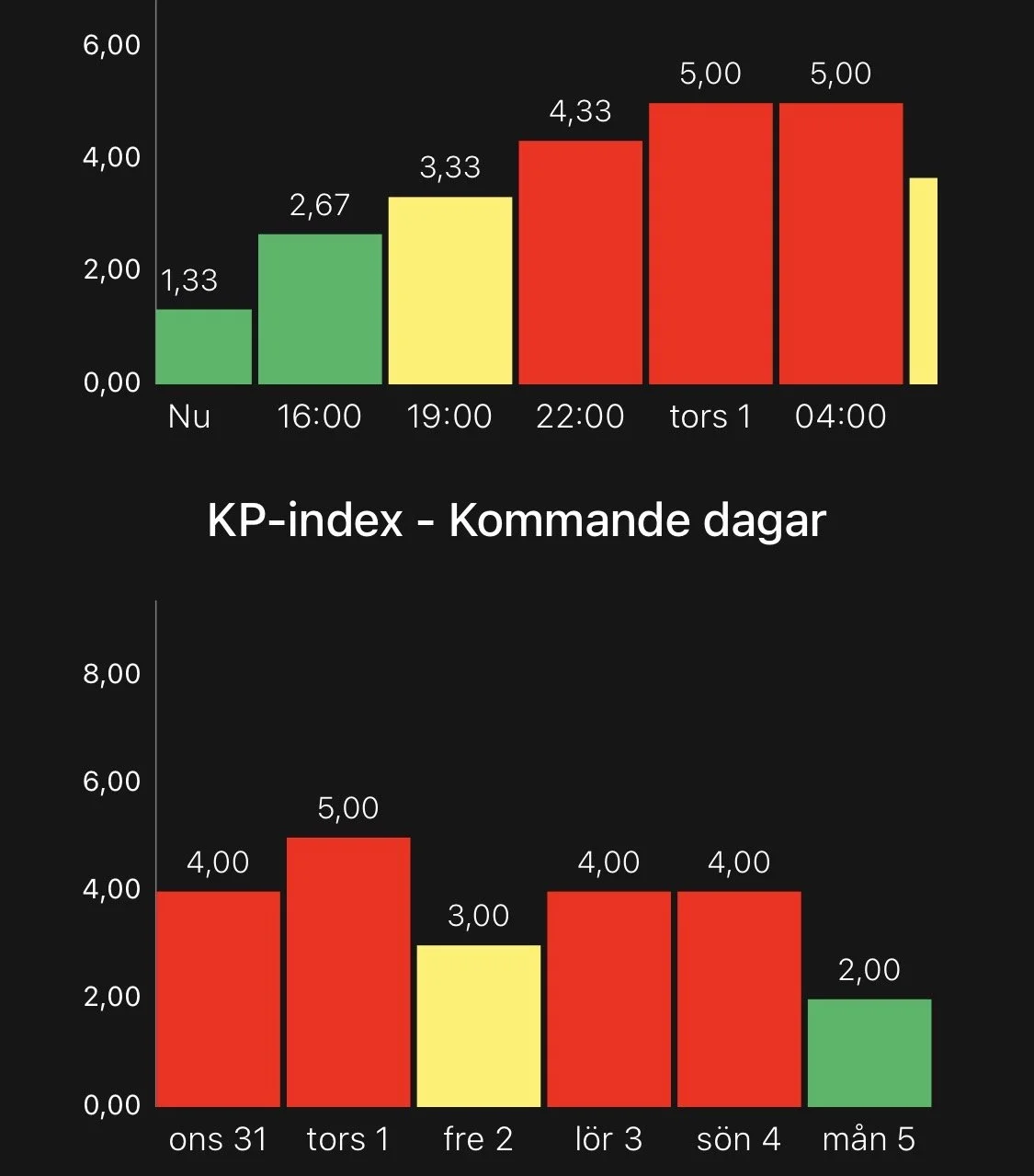
You can see here the KP index getting higher up to KP5
KP 1–2 can be more than enough
KP 3–4 often brings stronger movement
KP 5+ is strong Aurora
KP 6+ solar storm
The key point is that KP describes potential, not visibility.
Aurora activity also comes in waves. A slowly rising KP is often more interesting than a high but flat number. Short spikes can create intense displays that last only minutes. If you’re already outside when that happens, you’re rewarded. If you’re waiting for a “perfect forecast,” you may miss it entirely.
This is why weather almost always matters more than solar numbers. In practice, aurora hunting is decided by three things:
Is there any solar activity at all
Are there clear or breaking clouds
Can you move or wait comfortably
If those three line up, it’s worth going out. My personal experience- I saw the strongest aurora of my life when KP index showed KP 2.
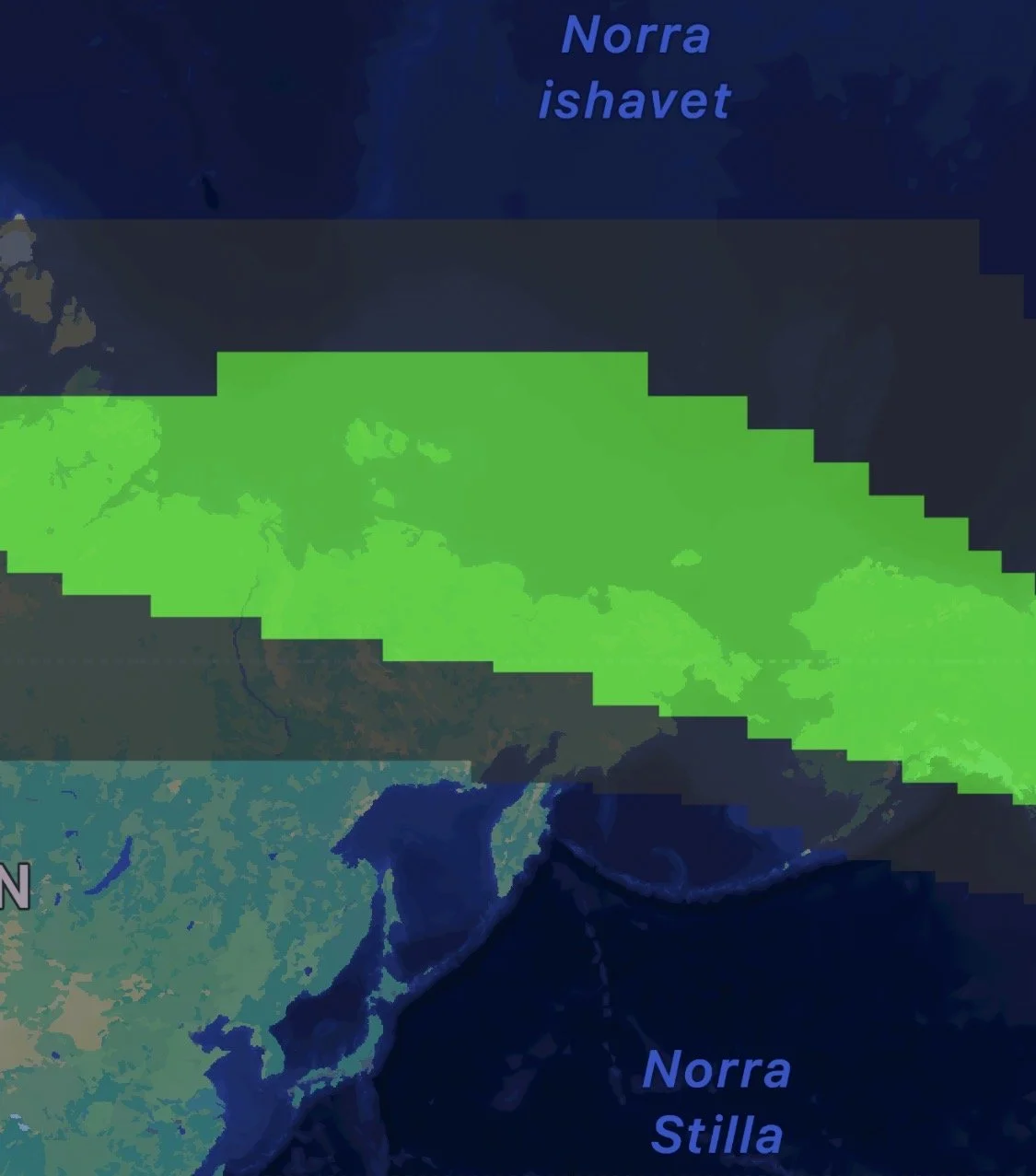
Image form the Aurora App
I use KP in a very relaxed way. I don’t cancel a night because the number looks low. I pay more attention to trends and timing than exact values. If KP is above zero and the sky is open, I’m interested.
Often, the aurora doesn’t arrive dramatically. It starts quietly, as a faint glow, almost easy to miss. And that’s usually when it’s at its most beautiful, right at the moment you realize the sky has been active all along and you were patient enough to notice.
A practical chapter – exact gear, exact choices, and how to work in the dark
Aurora photography rewards simplicity and reliability. When it happens, it happens fast. The goal is not to experiment, but to execute calmly and consistently.
Camera – why I use Sony
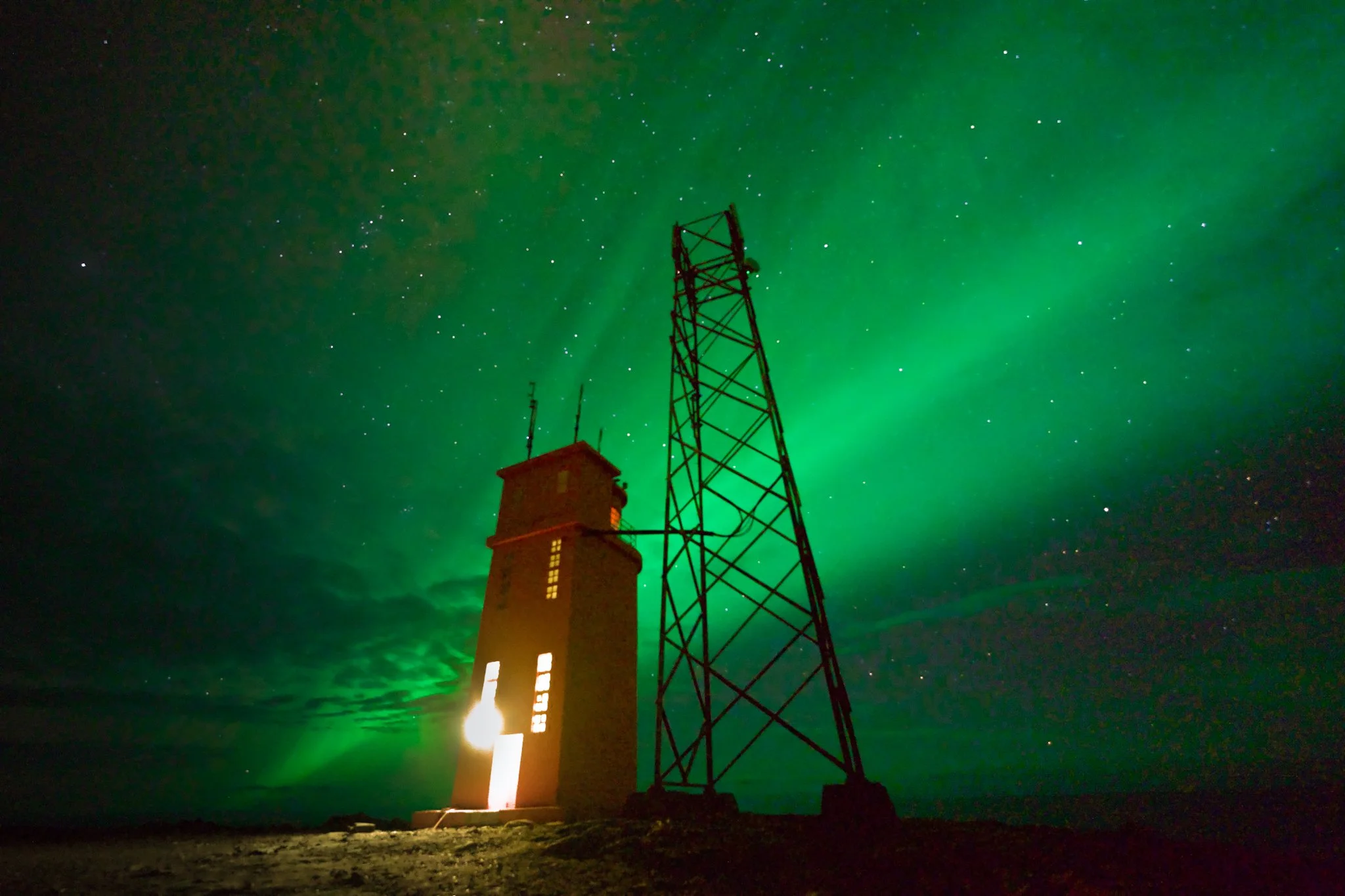
I photograph aurora with a Sony mirrorless camera, specifically a Sony V–series body, because of three things that matter enormously in Arctic night conditions:
Excellent high-ISO performance – clean files even when the aurora is weak
Reliable autofocus for setup, even though I always switch to manual focus for shooting
Strong battery management and fast operation in cold environments
Sony sensors handle shadow recovery very well, which is important when the aurora fades or shifts suddenly and you need flexibility in post-processing.
Lens – 14 mm f/1.8 is close to ideal
I use a 14 mm f/1.8 lens, and for aurora hunting it is close to perfect.
Why 14 mm?
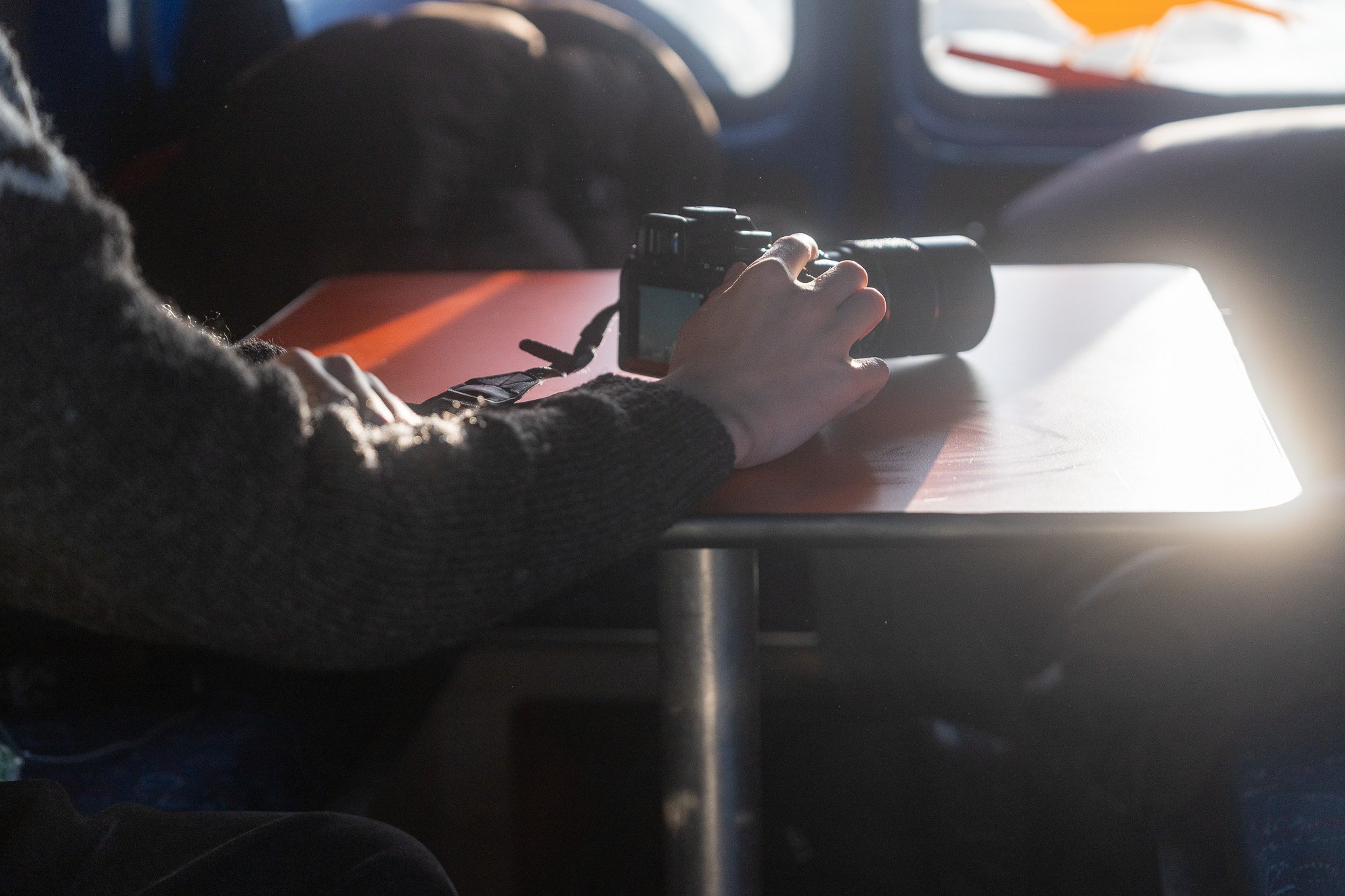
Extremely wide field of view captures large aurora curtains and movement
Allows inclusion of foreground elements like mountains, roads, or snow textures
More forgiving composition when the aurora suddenly fills the sky
Shutter speed:
1–3 seconds for fast, active aurora
5–8 seconds for slower, softer arcs
White balance: Daylight or 3500–4000 K (avoid Auto)Focus: Manual, set at infinity and checked
The key is to shorten shutter speed as soon as the aurora becomes active. Too long exposures will blur structure and movement.
Operating in complete darkness
Working at night requires routine more than vision.
My approach:
All camera settings are dialed in inside the camper
Lens hood on to reduce stray light
Tripod height pre-adjusted
Camera strap secured to avoid noise and movement
I avoid touching the camera once shooting starts. Small movements matter when exposures are short and conditions are windy.
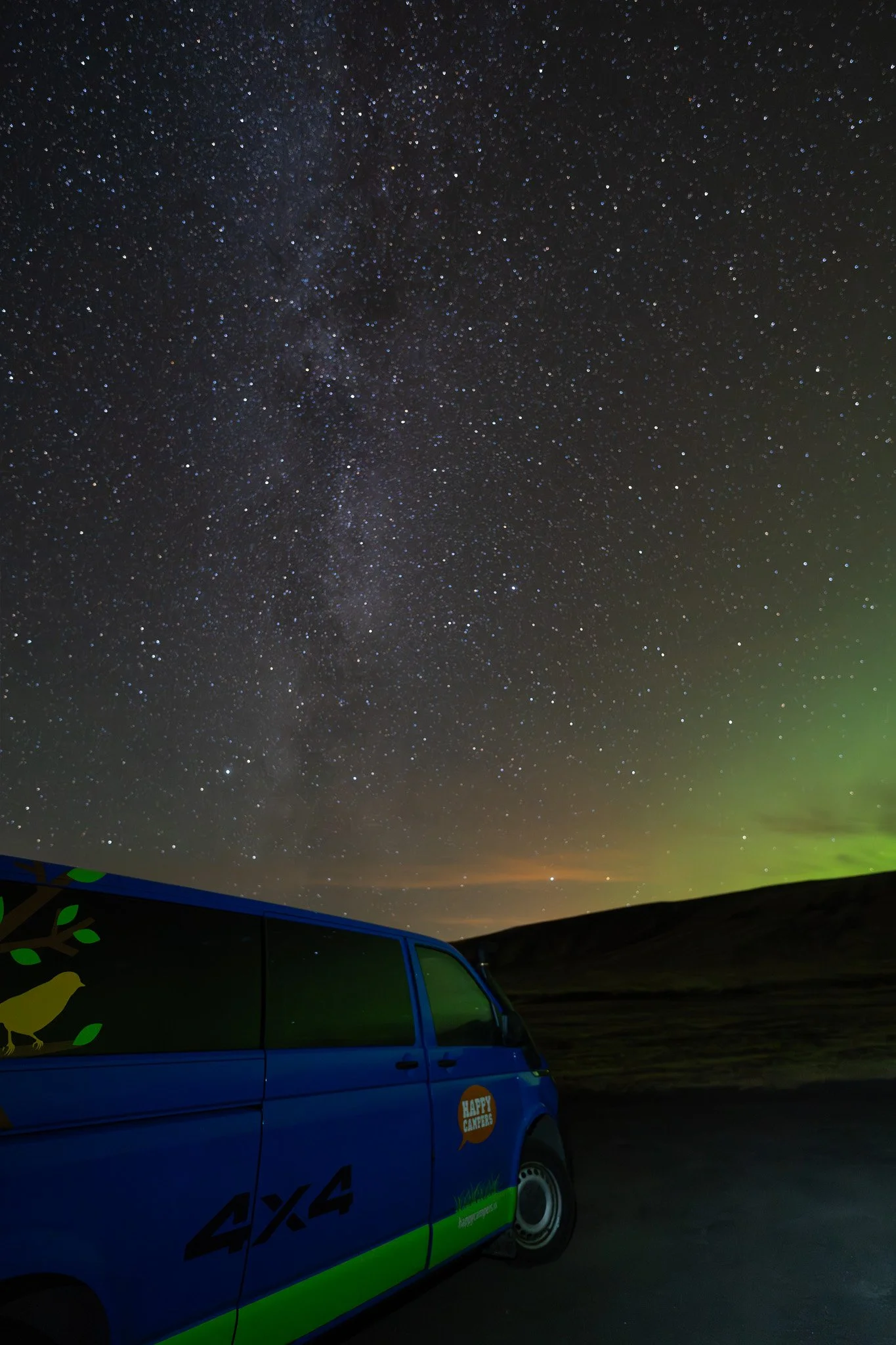
Headlamp – essential
A headlamp is necessary, but don’t annoy others around you :) I have one genius suggestion - get a winter cap with the rechargeable headlight inside! I always use it, and it’s amazing. But still - don’t annoy the others.
Rules I follow:
Red light mode only – preserves night vision
Lowest possible brightness
Light always pointed down, never toward others or the sky. Turn it off completely when shooting
Aurora locations are often shared spaces. Respecting others’ night vision and exposures is part of good field ethics. The darkness belongs to everyone. It was very difficult to photograph Verstahorn. Cars constantly turned the lights on and you can’t photograph like that.
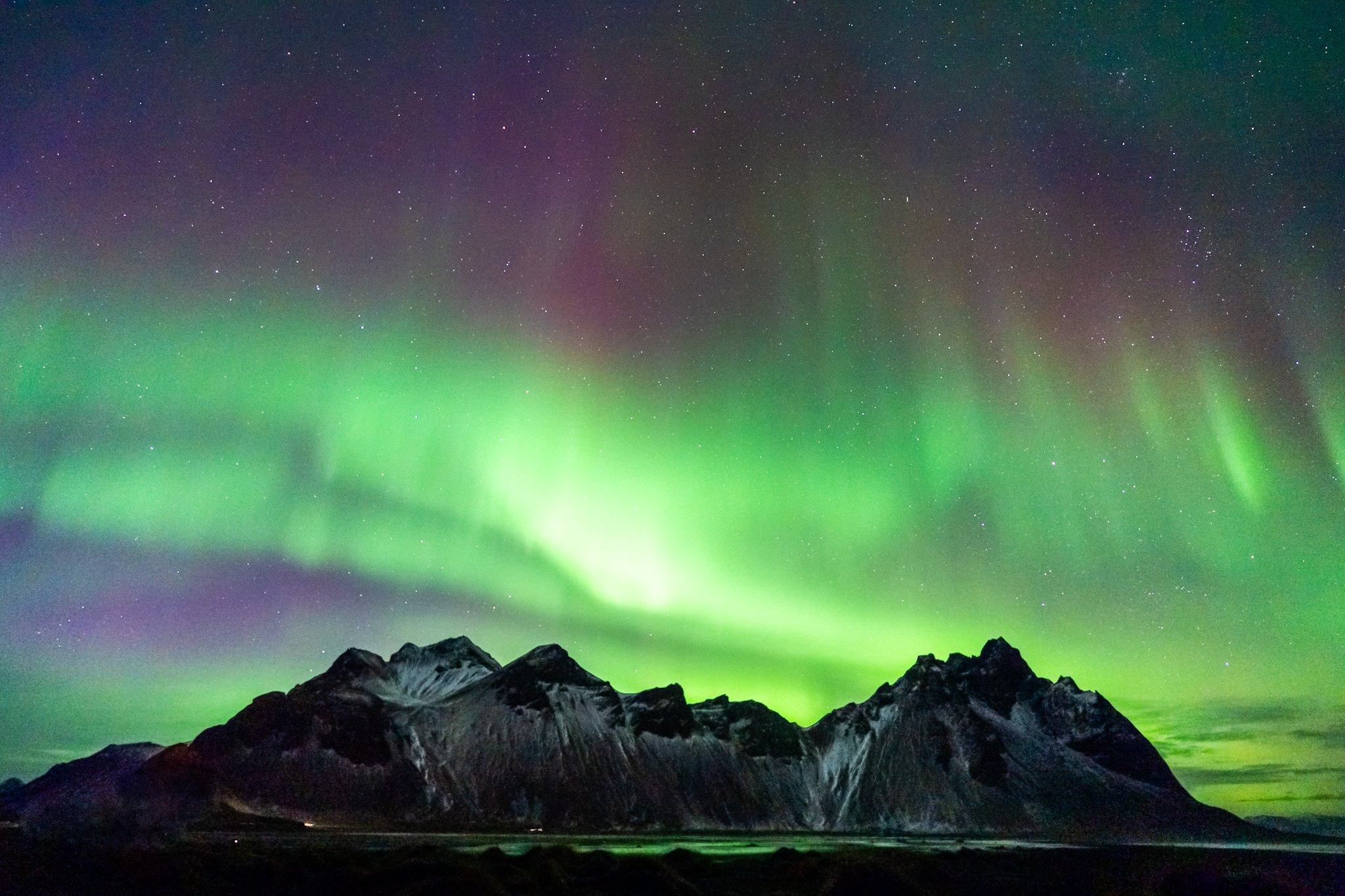
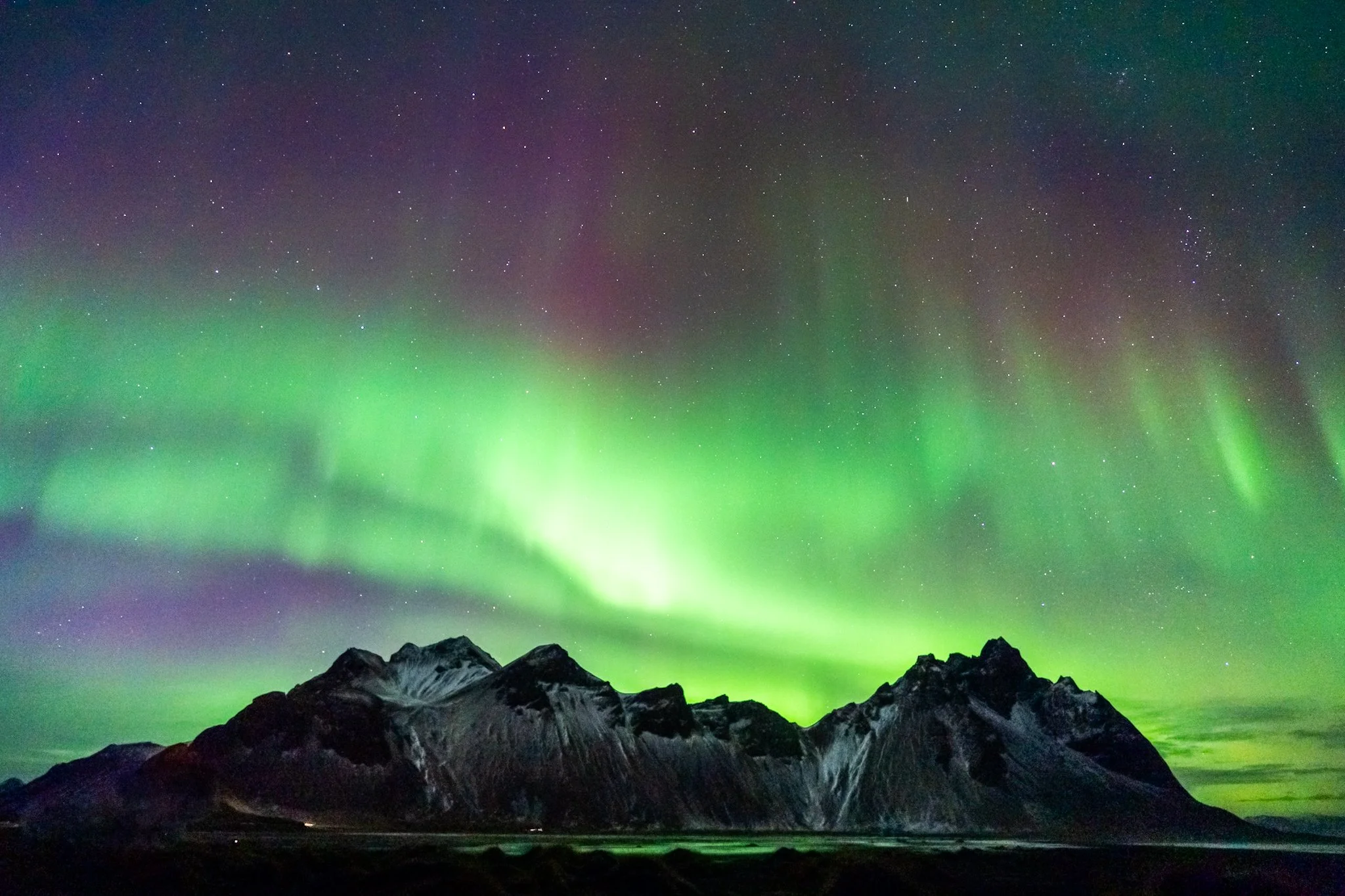
Aurora at Vestrahorn
What to wear – standing still in the Arctic night
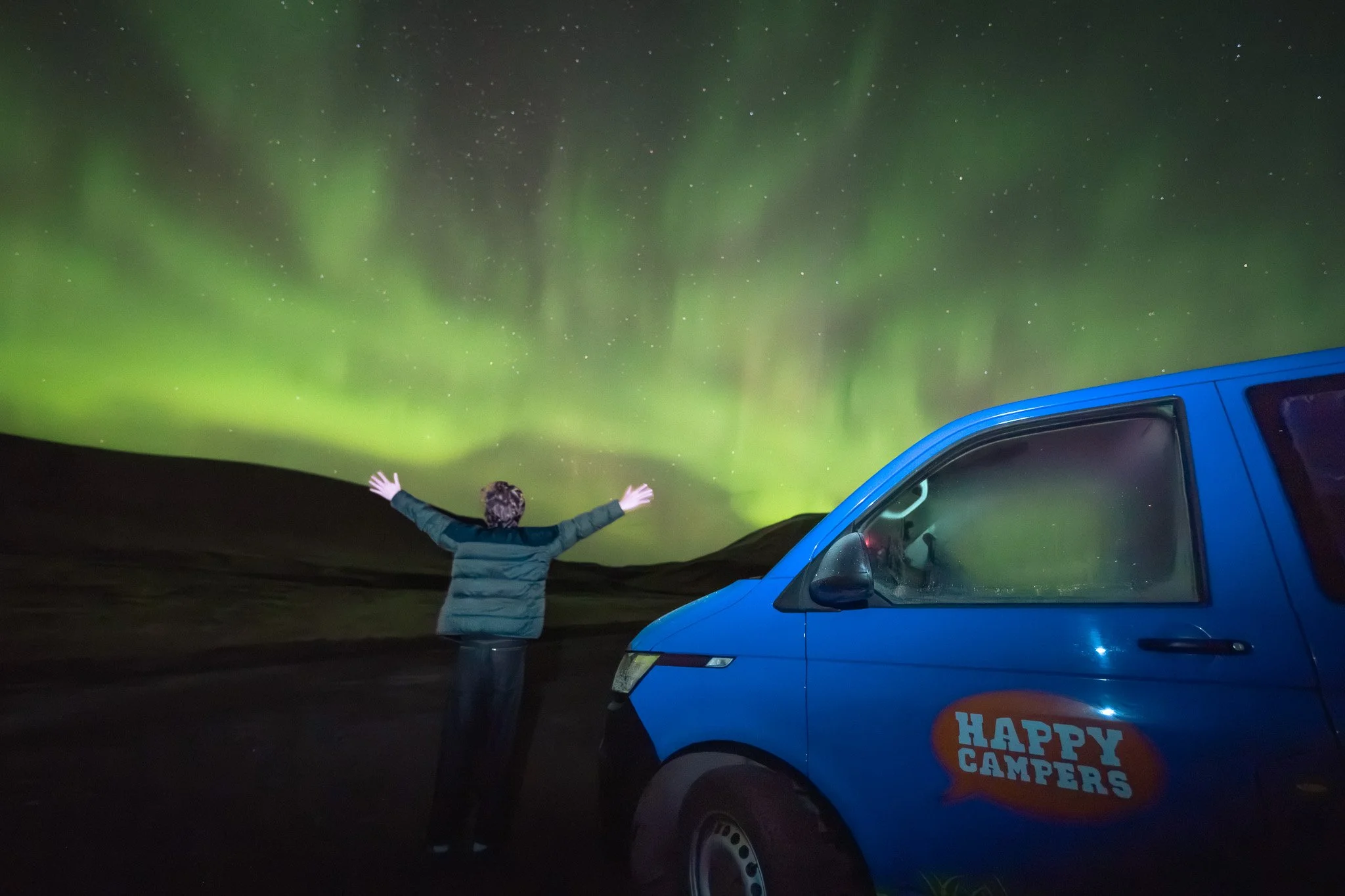
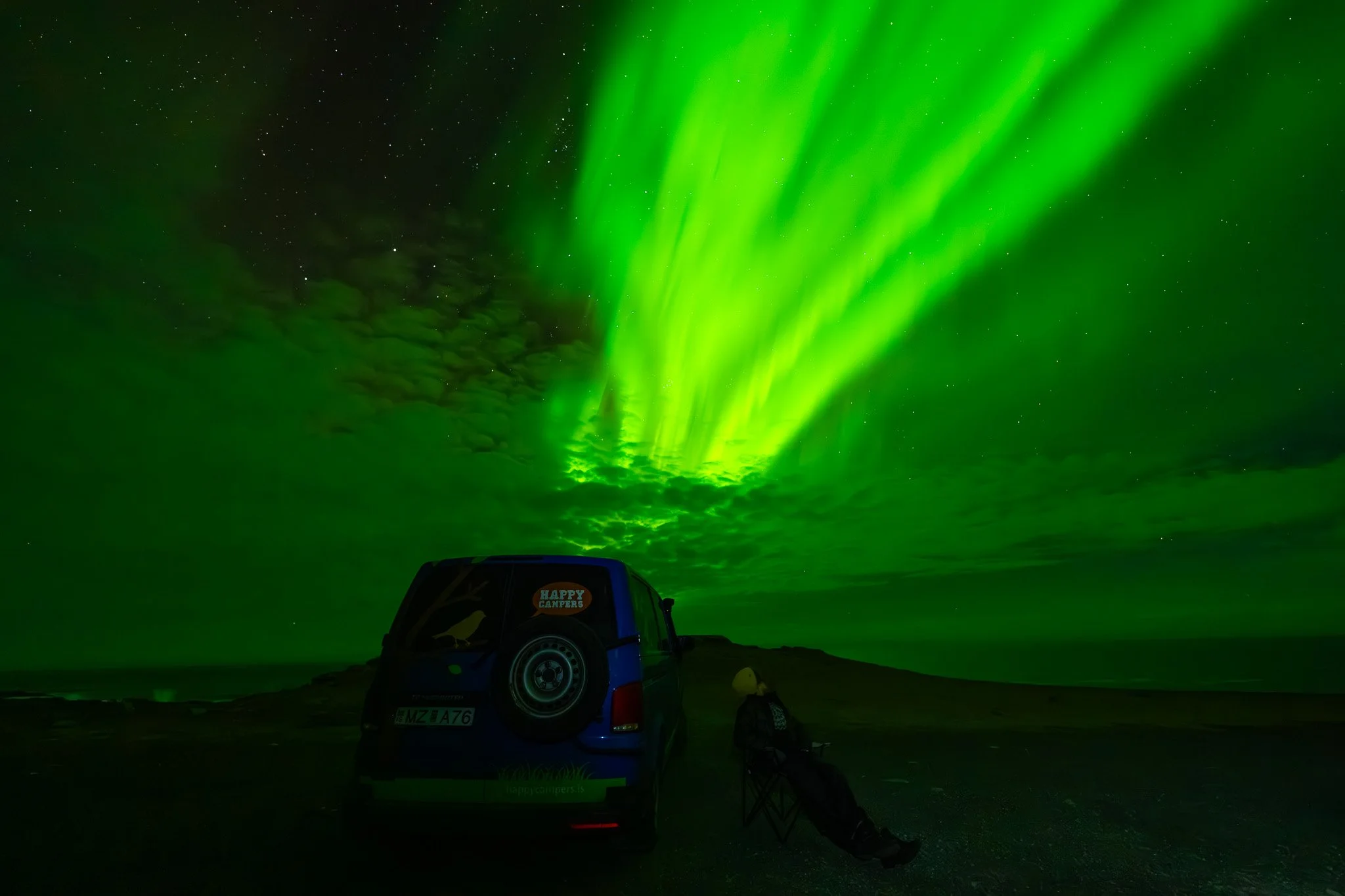
This is actually not a good example picture haha :) Its my son who just never freeze in any situations and loves arctic. He can sit in the ice water for several minutes and was refusing to put the cap during the aurora night. The camper was warm inside tho. so it was ok.
Cold feels different when you are not moving. Aurora hunting is about standing still, sometimes for long periods.
Layering is essential:
Merino wool base layers
Insulating mid-layers
Wind- and waterproof outer shell
Insulated boots with room for air
Two-layer glove system
Hat and neck protection
I never froze in my entire life so much like in the nights of the Aurora photography.
Clear sky means high pressure and cold nights. It really cold. And you are out in the cold for very long.
Despite all the planning, the forecasts, and the intention to be flexible, reality had the final word.
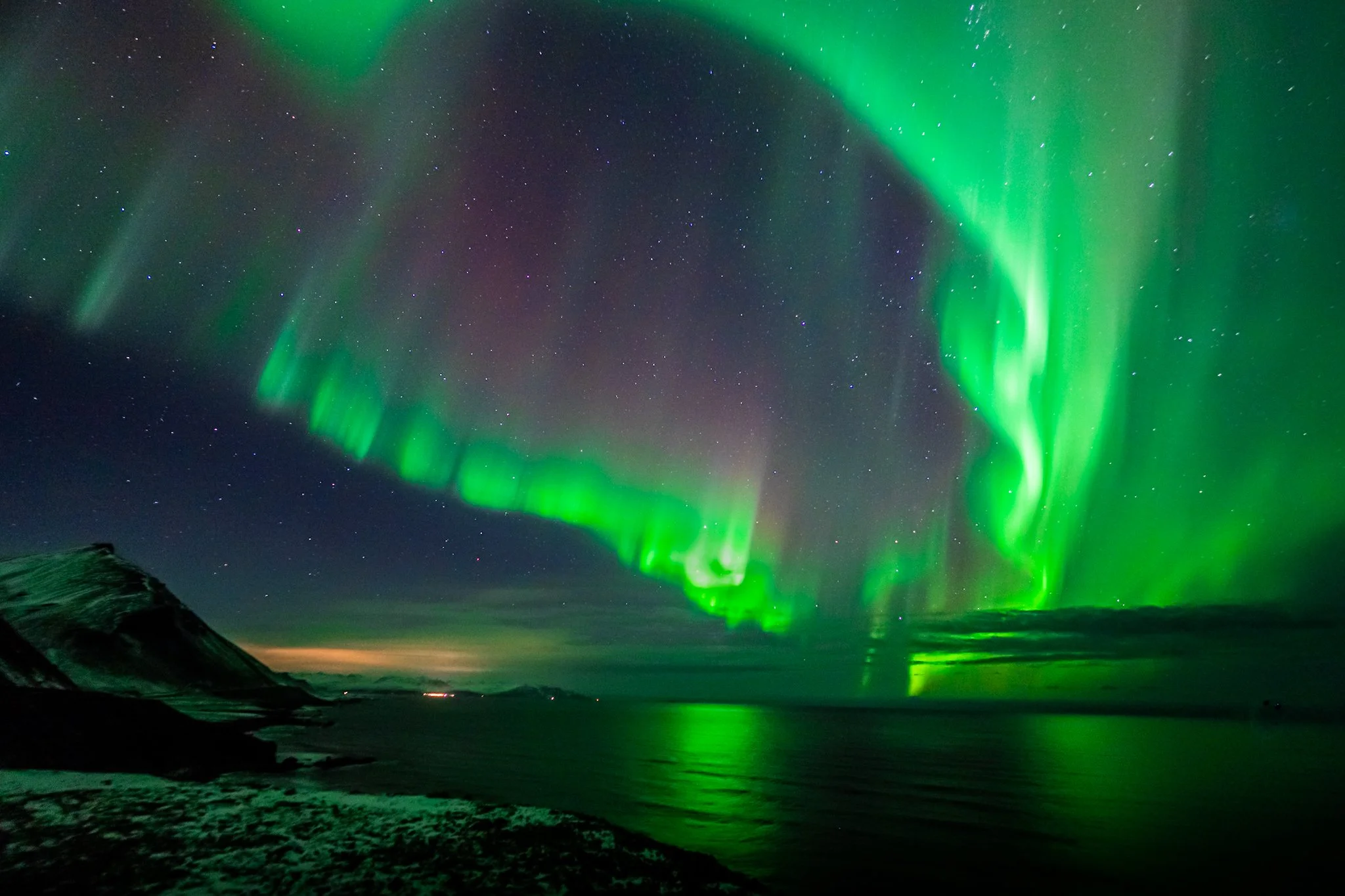
In ten days on the road, we never made it all the way around Iceland. The weather decided our route for us. We stayed mostly in the south and slightly towards the east, moving carefully, waiting often, sometimes turning back. We drove sometimes 5 hour to get the clear sky. And 5 hours back to escape the storm.
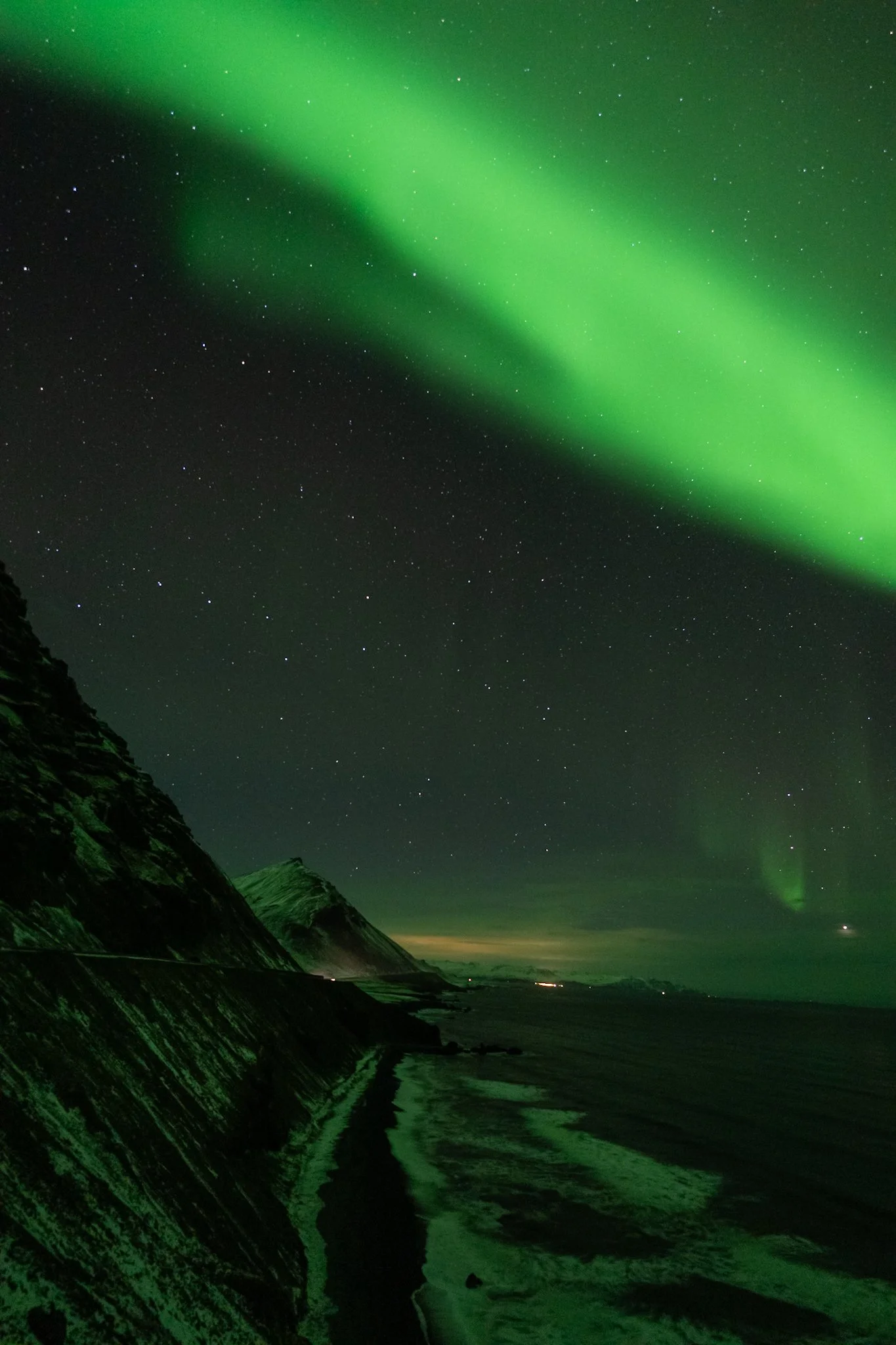
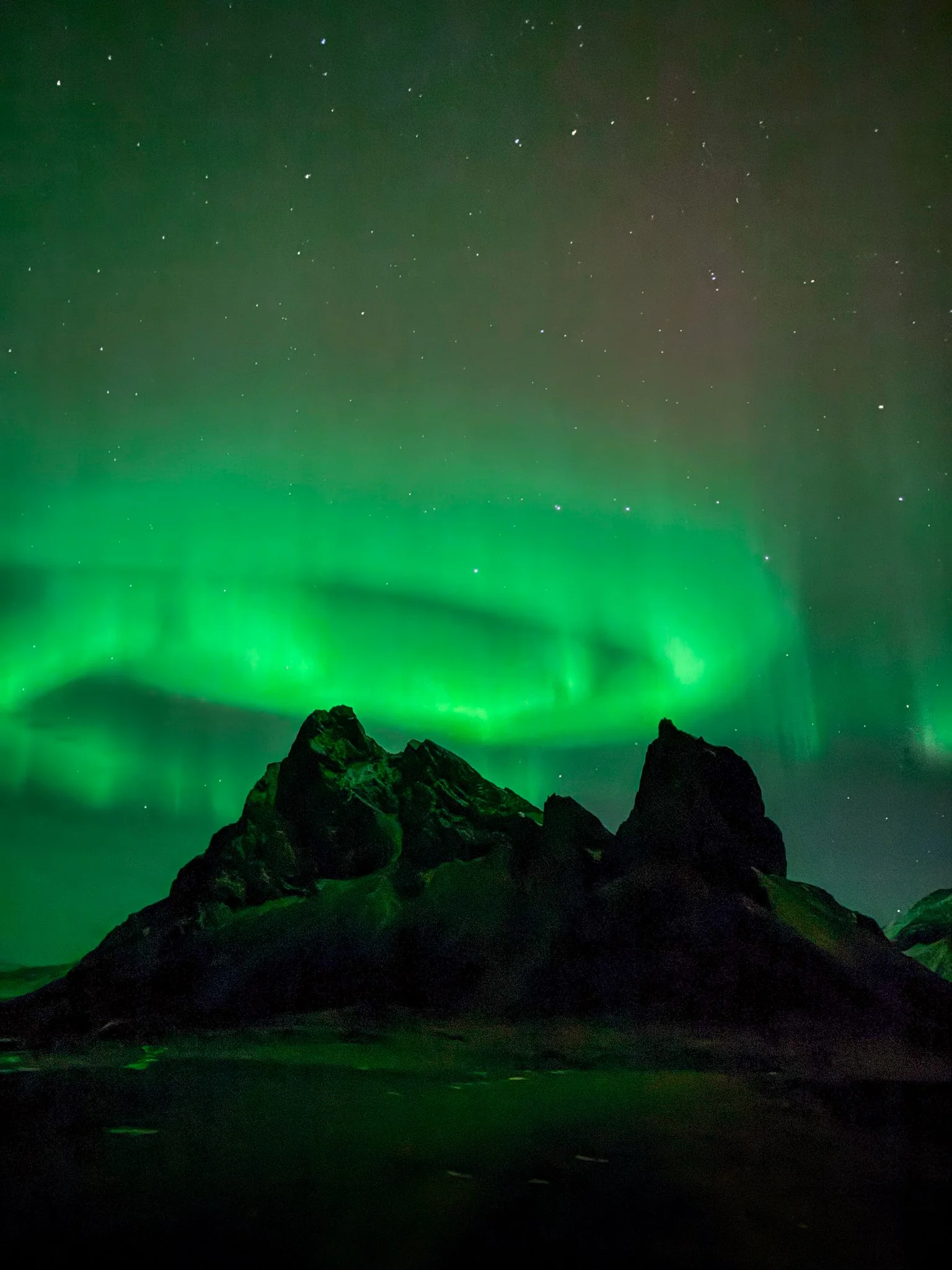
We were lucky enough to photograph and see the aurora clearly at Vestrahorn and Eystrahorn, and at a few locations along the south coast. These moments felt almost unreal, dramatic mountains, open skies, and the aurora moving quietly above us.
But out of those ten days, only two nights truly allowed for clear aurora photography.
The rest were filled with:
Heavy cloud cover
Strong winds
Snow and low visibility
Nights where the sky simply never opened
This is an important thing to say out loud, especially for anyone dreaming of aurora hunting in Iceland. Even with time, experience, and mobility, success is never guaranteed. Winter is uncompromising, and the aurora follows its own rhythm.
And yet, those two nights were magical!
Happy 4x4 review
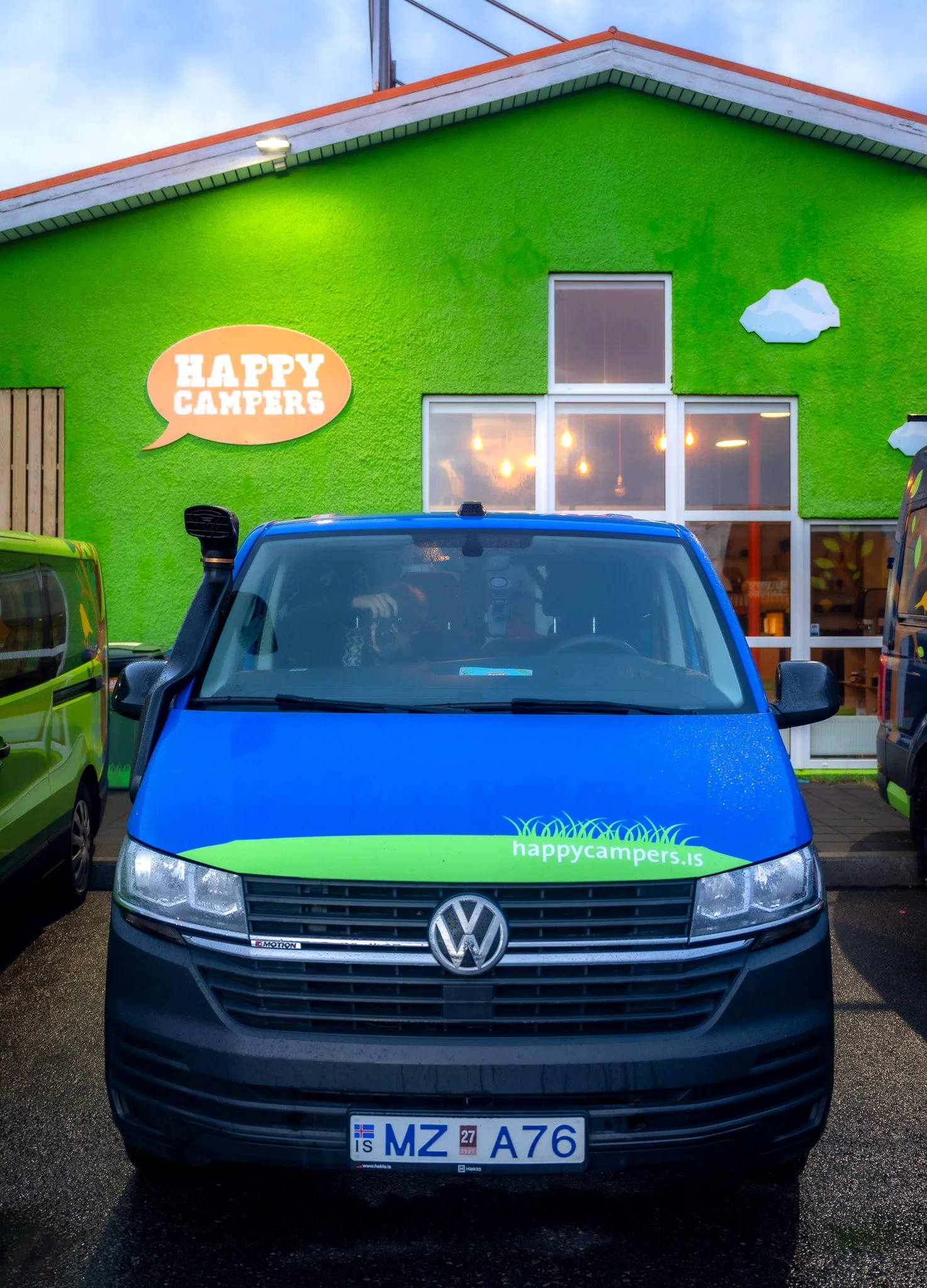
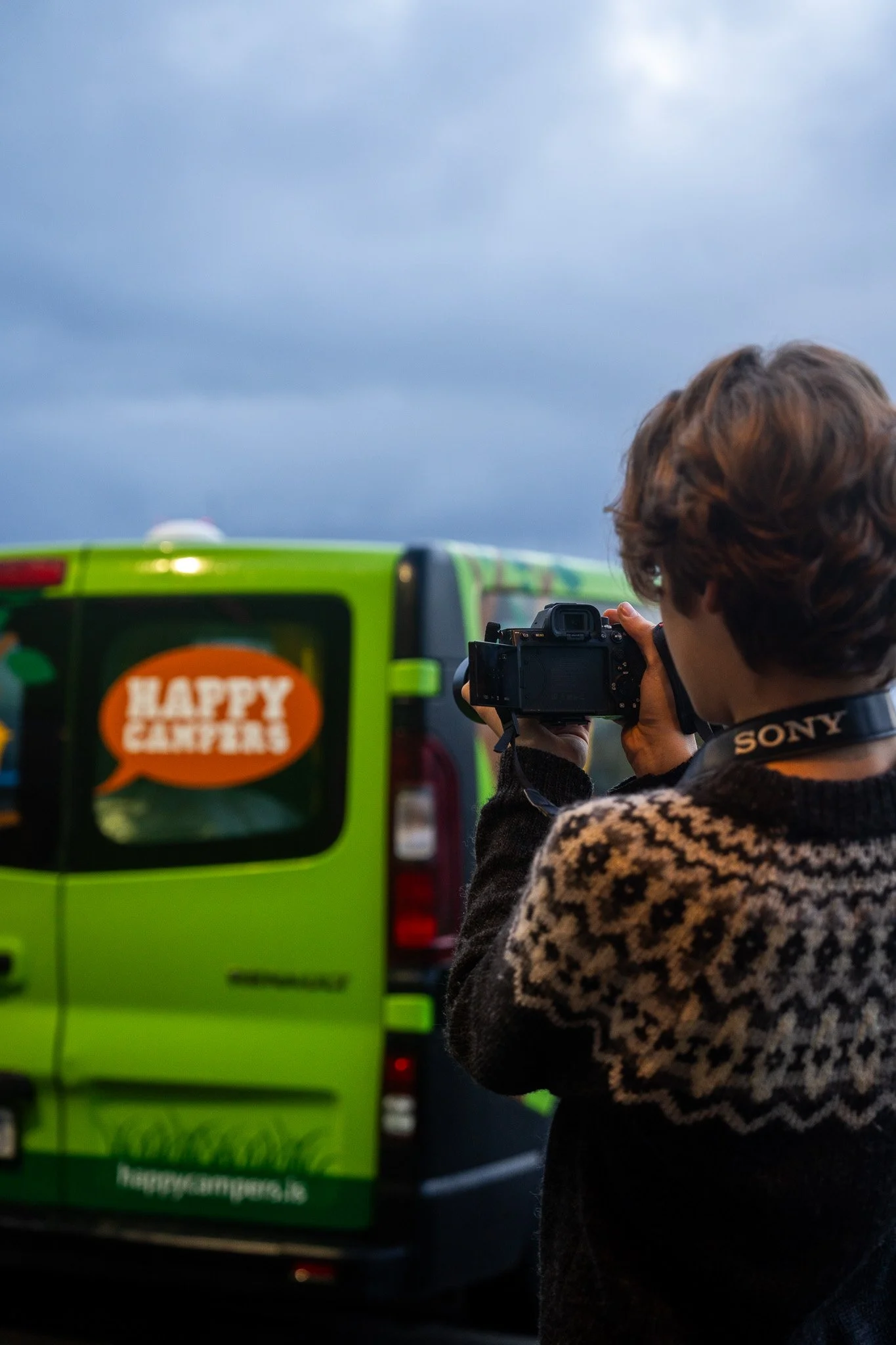
4x4 ✅ Allowed in highlands
Air intake modification ✅ Snorkel is important if you plan to cross the rivers
Kitchen inside ✅
Wool insulation ✅ very important for us
Charging possibilities ✅ 2 charging ports in the cabin and 2 in the living space. I charged 2 hubs of drone
batteries in the cabin and it was totally ok.
Heater ✅ lasts long! We tried 16 hours - was still going well
Easy transformable table-sofa into bed ✅ You can actually sit very well there
Storage space inside ✅
If there is something we would wish they would add, it is some sort of hooks for hanging the winter jackets near the door (this we have plenty in our own camper and it's very practical).


Generally, this camper is really a catch! I would not hesitate to get it in any time of the year. We loved it so much that we probably will get a transporter as a personal camper. It's a perfect size, easy to manoeuvre, but still not too small, so you can sit inside and have some space. The layout is very well thought out and comfortable.
Final thoughts
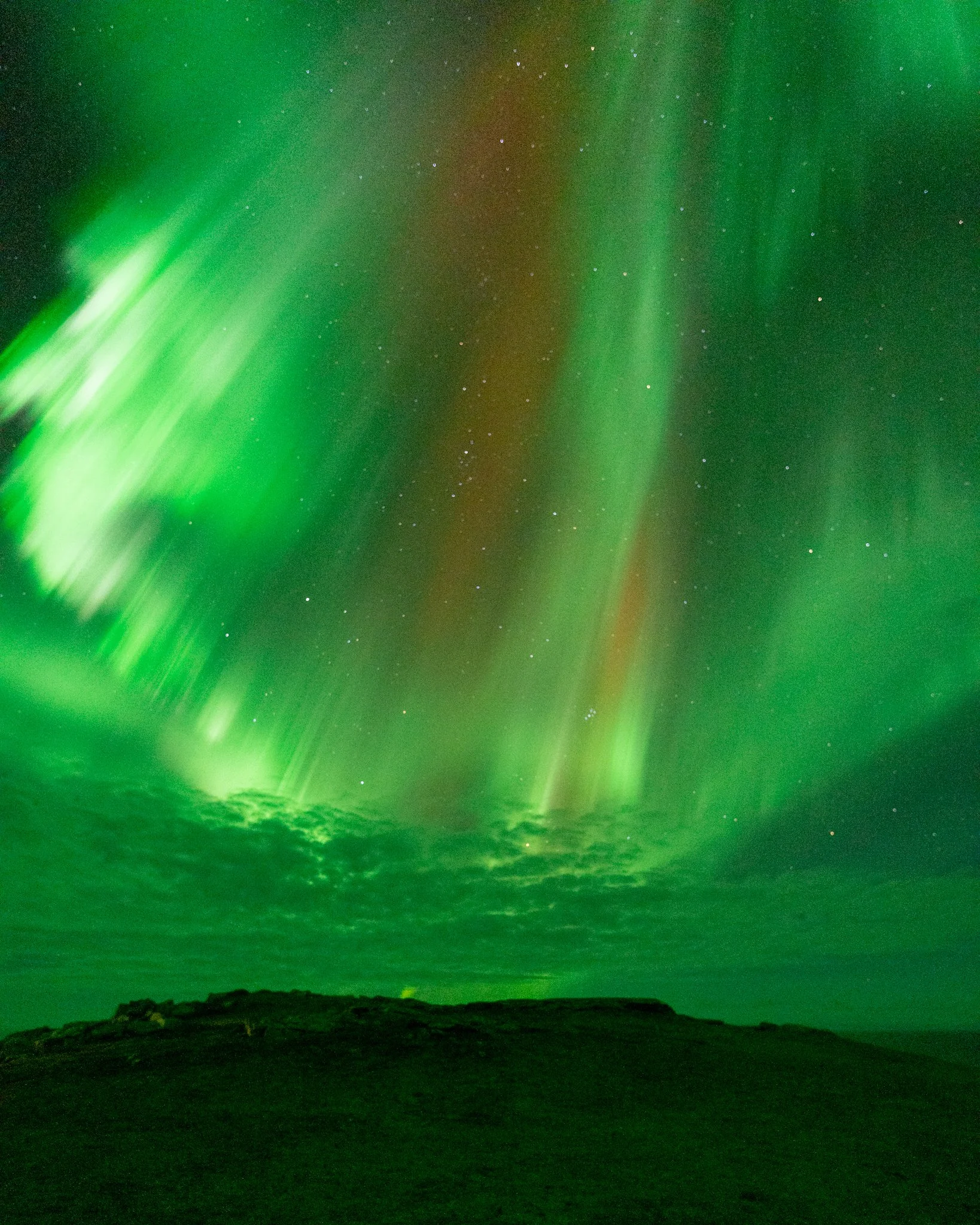
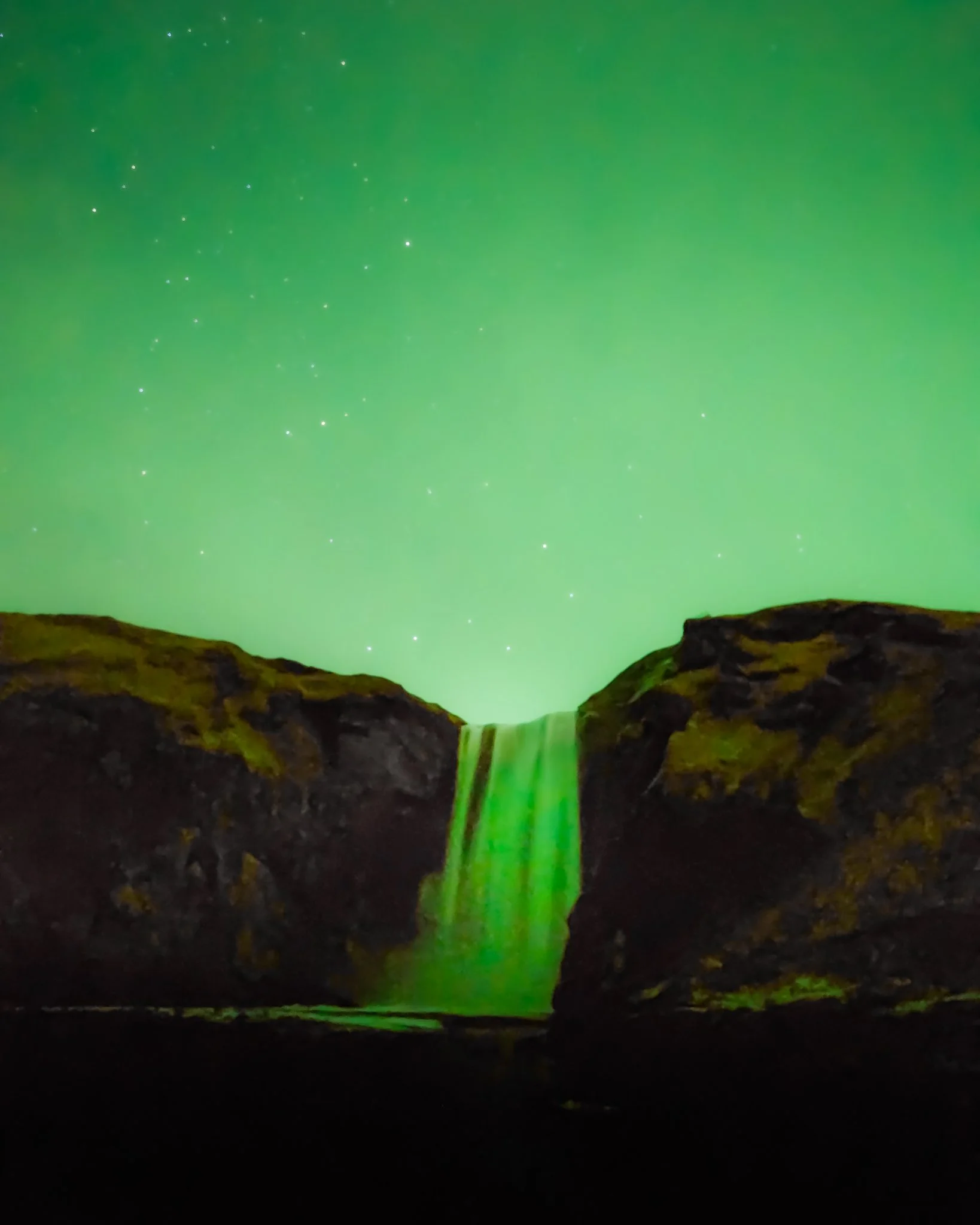
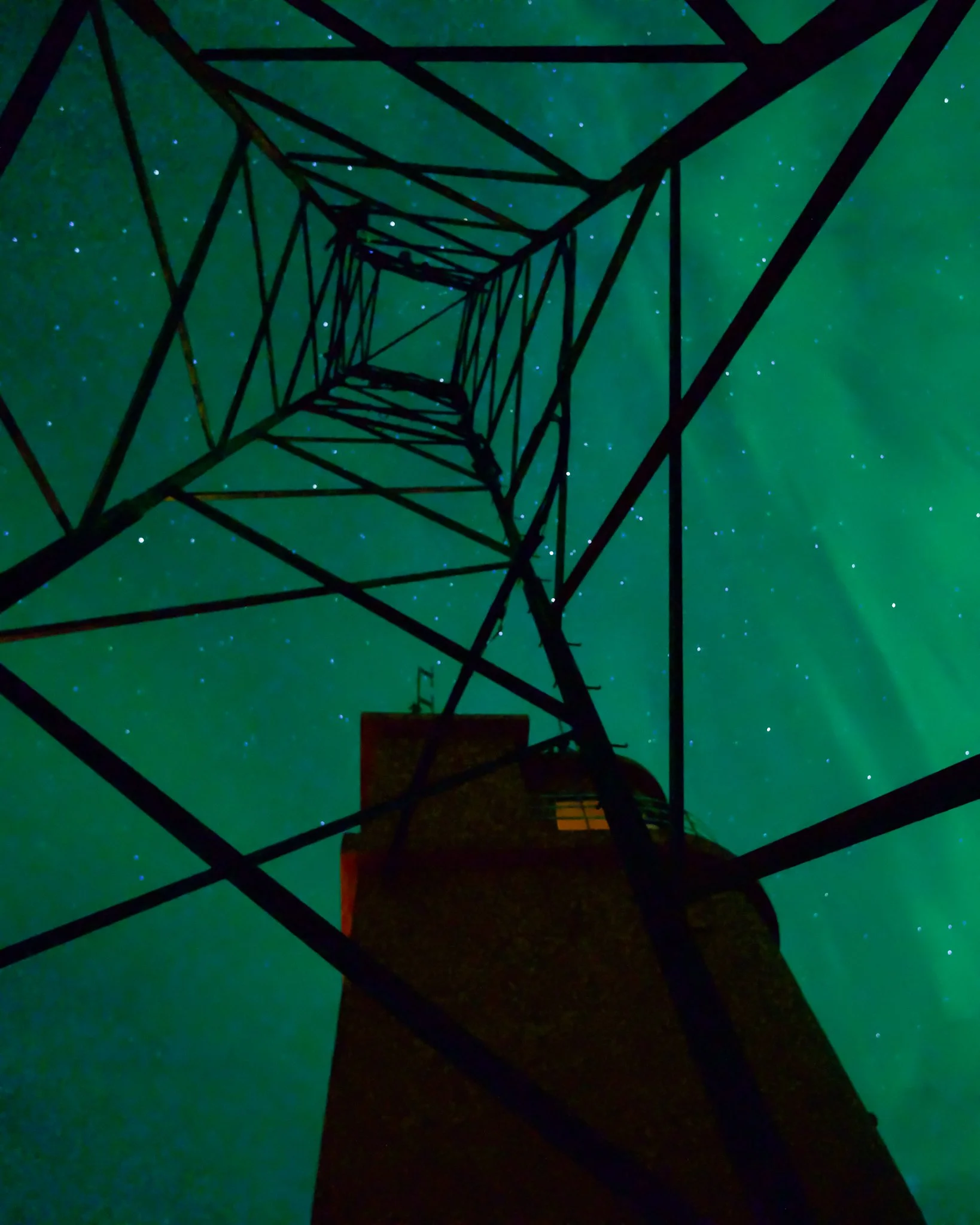
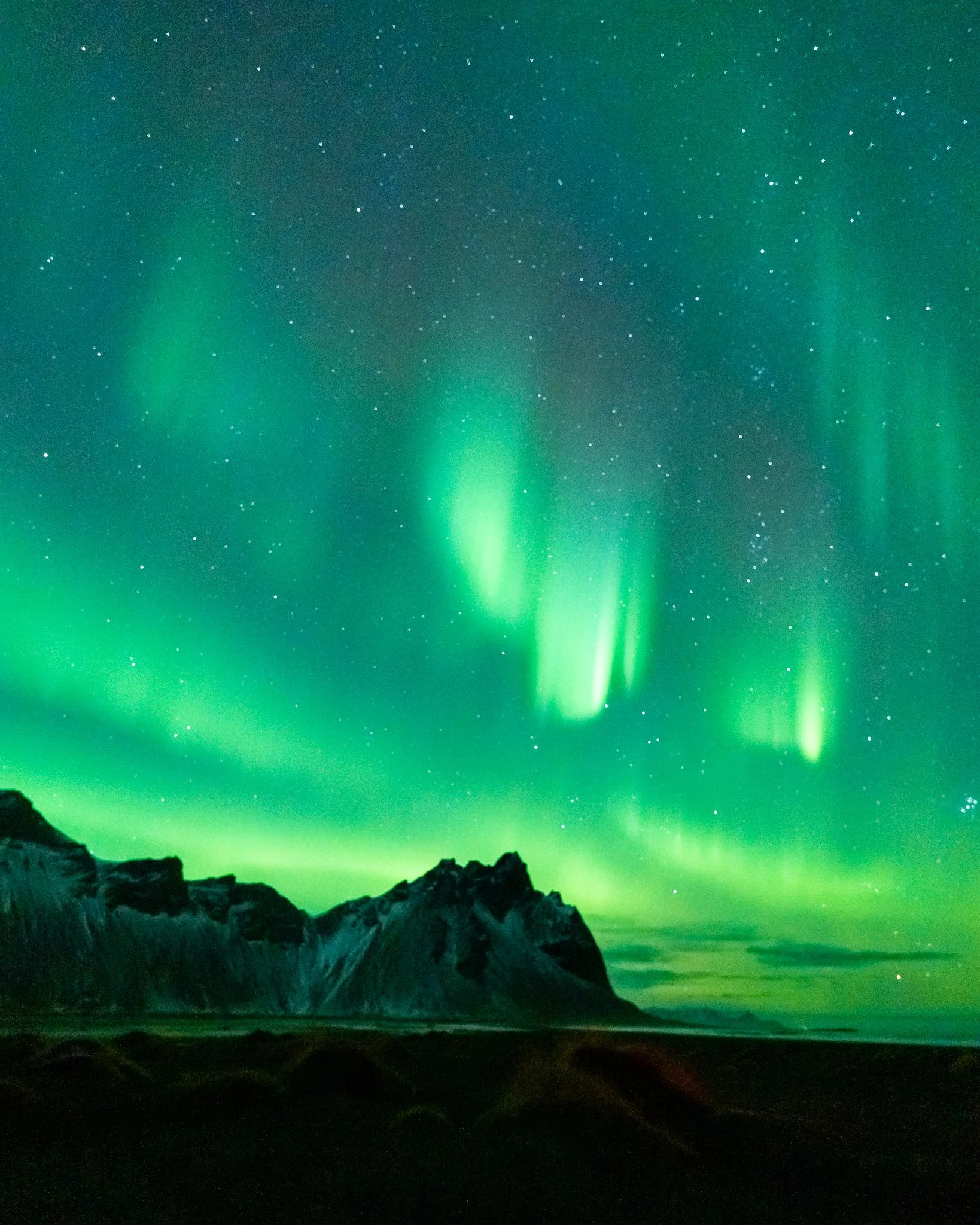
If I’m honest, aurora hunting in Iceland feels less like a well-planned expedition and more like a slightly ridiculous night game you willingly keep playing. You think you know what you’re doing, and Iceland politely proves you wrong, over and over again.
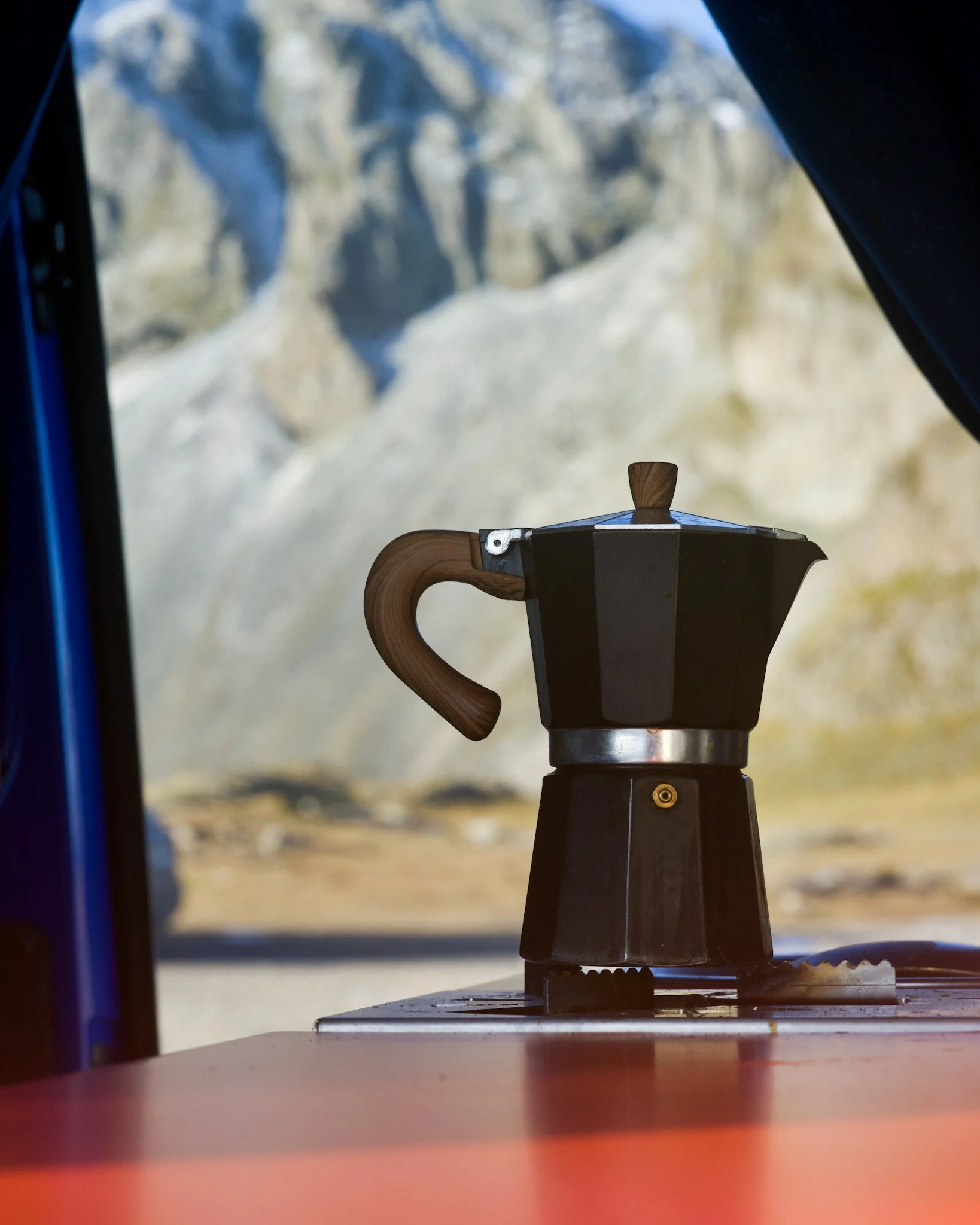
We had ten days. Forecasts, apps, plans, strong opinions. And still, only two nights really worked. The rest were spent driving in the dark, making coffee at unreasonable hours, stepping outside full of hope, and stepping back in five minutes later pretending that was exactly the plan. And somehow, that became the best part.
Aurora hunting is mostly about embracing the “maybe.” Maybe the clouds will break. Maybe that faint glow is something. Maybe we wait ten more minutes. You stop counting successes and start enjoying the process. The pressure disappears, and the nights get lighter, even when the sky stays dark.
The camera is there, ready but patient. When the aurora finally appears, it doesn’t feel dramatic or victorious. It feels like the sky casually joining you, as if it’s been watching this whole time and finally decided you seem fun enough to reward.
Doing all of this in a Happy Campers Happy 4X4 makes the whole thing felt like an adventure instead of a struggle. You’re warm, free to move, and comfortable enough to wait as long as curiosity lasts. The car becomes part of the fun, a mobile base for coffee, laughter, and those late-night “what if we try just a bit further?” ideas.
In the end, aurora hunting isn’t about how many nights you succeed. It’s about the stories you collect along the way. And if you come home with a couple of unforgettable nights, cold fingers, and a new appreciation for midnight coffee, you’ve done it exactly right.
Text and Photography: Julia M. Dahlkvist
